In computer security, camfecting is the process of attempting to hack into a person's webcam and activate it without the webcam owner's permission. The remotely activated webcam can be used to watch anything within the webcam's field of vision, sometimes including the webcam owner themselves. Camfecting is most often carried out by infecting the victim's computer with a virus that can provide the hacker access to their webcam. This attack is specifically targeted at the victim's webcam, and hence the name camfecting, a portmanteau of the words camera and infecting. Typically, a webcam hacker or a camfecter sends his victim an innocent-looking application which has a hidden Trojan software through which the camfecter can control the victim's webcam. The camfecter virus installs itself silently when the victim runs the original application. Once installed, the camfecter can turn on the webcam and capture pictures/videos. The camfecter software works just like the original webcam software present in the victim computer, the only difference being that the camfecter controls the software instead of the webcam's owner. == Notable cases == Marcus Thomas, former assistant director of the FBI's Operational Technology Division in Quantico, said in a 2013 story in The Washington Post that the FBI had been able to covertly activate a computer's camera—without triggering the light that lets users know it is recording—for several years. In November 2013, American teenager Jared James Abrahams pleaded guilty to hacking over 100-150 women and installing the highly invasive malware Blackshades on their computers in order to obtain nude images and videos of them. One of his victims was Miss Teen USA 2013 Cassidy Wolf. Researchers from Johns Hopkins University have shown how to covertly capture images from the iSight camera on MacBook and iMac models released before 2008, by reprogramming the microcontroller's firmware. == Prevention == A computer that does not have an up-to-date webcam software or any anti-virus (or firewall) software installed and operational may be at increased risk for camfecting from different types of malware. Softcams may nominally increase this risk, if not maintained or configured properly. Although a person cannot protect themselves from zero-day exploits that could potentially activate a camera unknowingly, such as Pegasus is able to do on smartphones. The only way to truly avoid being watched through your own camera is by blocking it physically, since software blocks can be overriden by advanced persistent threats. A simple piece of tape is more commonly used to offuscate the feed of the camera. With even Mark Zuckerberg doing so on his personal laptop that appeared during a presentation. And it being the way Snowden, an ex-contractor for the NSA, is portrayed to do so to prevent camfecting in the biopic Snowden. There is now a market for the manufacture and sale of sliding lens covers that allow users to physically block their computer's camera and, in some cases, microphone. A number of phone and laptop manufacturers tried to implement pop-up cameras that can only be opened manually by the user. But the trend did not become mainstream because of the engineering it took to keep the mechanisms up to date, aswell as the fragility and durability of the cameras.
Zolostays
Zolostays is a real-tech co-living focused startup that provides ready-to-move rooms/beds. It was founded in 2015 by Nikhil Sikri, Akhil Sikri and Sneha Choudhry. == Overview == During the pandemic, Zolo provided 75 of rent-free accommodation to those who lost their jobs. Zolo uses bulk inventory in usually residential township and ties up with real estate companies to make the rooms/beds available. Zolostays has both revenue sharing and leased model. == History == Zolostays was founded in 2015 to solve the problem of students and young professionals who would move to temporarily go to other cities to study and work and look for affordable housing. In 2020, it was operating in 10 Indian cities. It has four round of funding, with total $98 million.
Proximal gradient methods for learning
Proximal gradient (forward backward splitting) methods for learning is an area of research in optimization and statistical learning theory which studies algorithms for a general class of convex regularization problems where the regularization penalty may not be differentiable. One such example is ℓ 1 {\displaystyle \ell _{1}} regularization (also known as Lasso) of the form min w ∈ R d 1 n ∑ i = 1 n ( y i − ⟨ w , x i ⟩ ) 2 + λ ‖ w ‖ 1 , where x i ∈ R d and y i ∈ R . {\displaystyle \min _{w\in \mathbb {R} ^{d}}{\frac {1}{n}}\sum _{i=1}^{n}(y_{i}-\langle w,x_{i}\rangle )^{2}+\lambda \|w\|_{1},\quad {\text{ where }}x_{i}\in \mathbb {R} ^{d}{\text{ and }}y_{i}\in \mathbb {R} .} Proximal gradient methods offer a general framework for solving regularization problems from statistical learning theory with penalties that are tailored to a specific problem application. Such customized penalties can help to induce certain structure in problem solutions, such as sparsity (in the case of lasso) or group structure (in the case of group lasso). == Relevant background == Proximal gradient methods are applicable in a wide variety of scenarios for solving convex optimization problems of the form min x ∈ H F ( x ) + R ( x ) , {\displaystyle \min _{x\in {\mathcal {H}}}F(x)+R(x),} where F {\displaystyle F} is convex and differentiable with Lipschitz continuous gradient, R {\displaystyle R} is a convex, lower semicontinuous function which is possibly nondifferentiable, and H {\displaystyle {\mathcal {H}}} is some set, typically a Hilbert space. The usual criterion of x {\displaystyle x} minimizes F ( x ) + R ( x ) {\displaystyle F(x)+R(x)} if and only if ∇ ( F + R ) ( x ) = 0 {\displaystyle \nabla (F+R)(x)=0} in the convex, differentiable setting is now replaced by 0 ∈ ∂ ( F + R ) ( x ) , {\displaystyle 0\in \partial (F+R)(x),} where ∂ φ {\displaystyle \partial \varphi } denotes the subdifferential of a real-valued, convex function φ {\displaystyle \varphi } . Given a convex function φ : H → R {\displaystyle \varphi :{\mathcal {H}}\to \mathbb {R} } an important operator to consider is its proximal operator prox φ : H → H {\displaystyle \operatorname {prox} _{\varphi }:{\mathcal {H}}\to {\mathcal {H}}} defined by prox φ ( u ) = arg min x ∈ H φ ( x ) + 1 2 ‖ u − x ‖ 2 2 , {\displaystyle \operatorname {prox} _{\varphi }(u)=\operatorname {arg} \min _{x\in {\mathcal {H}}}\varphi (x)+{\frac {1}{2}}\|u-x\|_{2}^{2},} which is well-defined because of the strict convexity of the ℓ 2 {\displaystyle \ell _{2}} norm. The proximal operator can be seen as a generalization of a projection. We see that the proximity operator is important because x ∗ {\displaystyle x^{}} is a minimizer to the problem min x ∈ H F ( x ) + R ( x ) {\displaystyle \min _{x\in {\mathcal {H}}}F(x)+R(x)} if and only if x ∗ = prox γ R ( x ∗ − γ ∇ F ( x ∗ ) ) , {\displaystyle x^{}=\operatorname {prox} _{\gamma R}\left(x^{}-\gamma \nabla F(x^{})\right),} where γ > 0 {\displaystyle \gamma >0} is any positive real number. === Moreau decomposition === One important technique related to proximal gradient methods is the Moreau decomposition, which decomposes the identity operator as the sum of two proximity operators. Namely, let φ : X → R {\displaystyle \varphi :{\mathcal {X}}\to \mathbb {R} } be a lower semicontinuous, convex function on a vector space X {\displaystyle {\mathcal {X}}} . We define its Fenchel conjugate φ ∗ : X → R {\displaystyle \varphi ^{}:{\mathcal {X}}\to \mathbb {R} } to be the function φ ∗ ( u ) := sup x ∈ X ⟨ x , u ⟩ − φ ( x ) . {\displaystyle \varphi ^{}(u):=\sup _{x\in {\mathcal {X}}}\langle x,u\rangle -\varphi (x).} The general form of Moreau's decomposition states that for any x ∈ X {\displaystyle x\in {\mathcal {X}}} and any γ > 0 {\displaystyle \gamma >0} that x = prox γ φ ( x ) + γ prox φ ∗ / γ ( x / γ ) , {\displaystyle x=\operatorname {prox} _{\gamma \varphi }(x)+\gamma \operatorname {prox} _{\varphi ^{}/\gamma }(x/\gamma ),} which for γ = 1 {\displaystyle \gamma =1} implies that x = prox φ ( x ) + prox φ ∗ ( x ) {\displaystyle x=\operatorname {prox} _{\varphi }(x)+\operatorname {prox} _{\varphi ^{}}(x)} . The Moreau decomposition can be seen to be a generalization of the usual orthogonal decomposition of a vector space, analogous with the fact that proximity operators are generalizations of projections. In certain situations it may be easier to compute the proximity operator for the conjugate φ ∗ {\displaystyle \varphi ^{}} instead of the function φ {\displaystyle \varphi } , and therefore the Moreau decomposition can be applied. This is the case for group lasso. == Lasso regularization == Consider the regularized empirical risk minimization problem with square loss and with the ℓ 1 {\displaystyle \ell _{1}} norm as the regularization penalty: min w ∈ R d 1 n ∑ i = 1 n ( y i − ⟨ w , x i ⟩ ) 2 + λ ‖ w ‖ 1 , {\displaystyle \min _{w\in \mathbb {R} ^{d}}{\frac {1}{n}}\sum _{i=1}^{n}(y_{i}-\langle w,x_{i}\rangle )^{2}+\lambda \|w\|_{1},} where x i ∈ R d and y i ∈ R . {\displaystyle x_{i}\in \mathbb {R} ^{d}{\text{ and }}y_{i}\in \mathbb {R} .} The ℓ 1 {\displaystyle \ell _{1}} regularization problem is sometimes referred to as lasso (least absolute shrinkage and selection operator). Such ℓ 1 {\displaystyle \ell _{1}} regularization problems are interesting because they induce sparse solutions, that is, solutions w {\displaystyle w} to the minimization problem have relatively few nonzero components. Lasso can be seen to be a convex relaxation of the non-convex problem min w ∈ R d 1 n ∑ i = 1 n ( y i − ⟨ w , x i ⟩ ) 2 + λ ‖ w ‖ 0 , {\displaystyle \min _{w\in \mathbb {R} ^{d}}{\frac {1}{n}}\sum _{i=1}^{n}(y_{i}-\langle w,x_{i}\rangle )^{2}+\lambda \|w\|_{0},} where ‖ w ‖ 0 {\displaystyle \|w\|_{0}} denotes the ℓ 0 {\displaystyle \ell _{0}} "norm", which is the number of nonzero entries of the vector w {\displaystyle w} . Sparse solutions are of particular interest in learning theory for interpretability of results: a sparse solution can identify a small number of important factors. === Solving for L1 proximity operator === For simplicity we restrict our attention to the problem where λ = 1 {\displaystyle \lambda =1} . To solve the problem min w ∈ R d 1 n ∑ i = 1 n ( y i − ⟨ w , x i ⟩ ) 2 + ‖ w ‖ 1 , {\displaystyle \min _{w\in \mathbb {R} ^{d}}{\frac {1}{n}}\sum _{i=1}^{n}(y_{i}-\langle w,x_{i}\rangle )^{2}+\|w\|_{1},} we consider our objective function in two parts: a convex, differentiable term F ( w ) = 1 n ∑ i = 1 n ( y i − ⟨ w , x i ⟩ ) 2 {\displaystyle F(w)={\frac {1}{n}}\sum _{i=1}^{n}(y_{i}-\langle w,x_{i}\rangle )^{2}} and a convex function R ( w ) = ‖ w ‖ 1 {\displaystyle R(w)=\|w\|_{1}} . Note that R {\displaystyle R} is not strictly convex. Let us compute the proximity operator for R ( w ) {\displaystyle R(w)} . First we find an alternative characterization of the proximity operator prox R ( x ) {\displaystyle \operatorname {prox} _{R}(x)} as follows: u = prox R ( x ) ⟺ 0 ∈ ∂ ( R ( u ) + 1 2 ‖ u − x ‖ 2 2 ) ⟺ 0 ∈ ∂ R ( u ) + u − x ⟺ x − u ∈ ∂ R ( u ) . {\displaystyle {\begin{aligned}u=\operatorname {prox} _{R}(x)\iff &0\in \partial \left(R(u)+{\frac {1}{2}}\|u-x\|_{2}^{2}\right)\\\iff &0\in \partial R(u)+u-x\\\iff &x-u\in \partial R(u).\end{aligned}}} For R ( w ) = ‖ w ‖ 1 {\displaystyle R(w)=\|w\|_{1}} it is easy to compute ∂ R ( w ) {\displaystyle \partial R(w)} : the i {\displaystyle i} th entry of ∂ R ( w ) {\displaystyle \partial R(w)} is precisely ∂ | w i | = { 1 , w i > 0 − 1 , w i < 0 [ − 1 , 1 ] , w i = 0. {\displaystyle \partial |w_{i}|={\begin{cases}1,&w_{i}>0\\-1,&w_{i}<0\\\left[-1,1\right],&w_{i}=0.\end{cases}}} Using the recharacterization of the proximity operator given above, for the choice of R ( w ) = ‖ w ‖ 1 {\displaystyle R(w)=\|w\|_{1}} and γ > 0 {\displaystyle \gamma >0} we have that prox γ R ( x ) {\displaystyle \operatorname {prox} _{\gamma R}(x)} is defined entrywise by ( prox γ R ( x ) ) i = { x i − γ , x i > γ 0 , | x i | ≤ γ x i + γ , x i < − γ , {\displaystyle \left(\operatorname {prox} _{\gamma R}(x)\right)_{i}={\begin{cases}x_{i}-\gamma ,&x_{i}>\gamma \\0,&|x_{i}|\leq \gamma \\x_{i}+\gamma ,&x_{i}<-\gamma ,\end{cases}}} which is known as the soft thresholding operator S γ ( x ) = prox γ ‖ ⋅ ‖ 1 ( x ) {\displaystyle S_{\gamma }(x)=\operatorname {prox} _{\gamma \|\cdot \|_{1}}(x)} . === Fixed point iterative schemes === To finally solve the lasso problem we consider the fixed point equation shown earlier: x ∗ = prox γ R ( x ∗ − γ ∇ F ( x ∗ ) ) . {\displaystyle x^{}=\operatorname {prox} _{\gamma R}\left(x^{}-\gamma \nabla F(x^{})\right).} Given that we have computed the form of the proximity operator explicitly, then we can define a standard fixed point iteration procedure. Namely, fix some initial w 0 ∈ R d {\displaystyle w^{0}\in \mathbb {R} ^{d}} , and for k = 1 , 2 , … {\displaystyle k=1,2,\ldots } define w k + 1 = S γ ( w k − γ ∇ F ( w k ) ) . {\displaystyle w^{k+1}=S_{\gamma }\left(w^{k}-\gamma \nabla F\l
Workplace impact of artificial intelligence
The impact of artificial intelligence on workers includes both applications to improve worker safety and health, and potential hazards that must be controlled. One potential application is using AI to eliminate hazards by removing humans from hazardous situations that involve risk of stress, overwork, or musculoskeletal injuries. Predictive analytics may also be used to identify conditions that may lead to hazards such as fatigue, repetitive strain injuries, or toxic substance exposure, leading to earlier interventions. Another is to streamline workplace safety and health workflows through automating repetitive tasks, enhancing safety training programs through virtual reality, or detecting and reporting near misses. When used in the workplace, AI also presents the possibility of new hazards. These may arise from machine learning techniques leading to unpredictable behavior and inscrutability in their decision-making, or from cybersecurity and information privacy issues. Many hazards of AI are psychosocial due to its potential to cause changes in work organization. These include increased monitoring leading to micromanagement, algorithms unintentionally or intentionally mimicking undesirable human biases, and assigning blame for machine errors to the human operator instead. AI may also lead to physical hazards in the form of human–robot collisions, and ergonomic risks of control interfaces and human–machine interactions. Hazard controls include cybersecurity and information privacy measures, communication and transparency with workers about data usage, and limitations on collaborative robots. From a workplace safety and health perspective, only "weak" or "narrow" AI that is tailored to a specific task is relevant, as there are many examples that are currently in use or expected to come into use in the near future. Certain digital technologies are predicted to result in job losses. Starting in the 2020s, the adoption of modern robotics has led to net employment growth. However, many businesses anticipate that automation, or employing robots would result in job losses in the future. This is especially true for companies in Central and Eastern Europe. Other digital technologies, such as platforms or big data, are projected to have a more neutral impact on employment. A large number of tech workers have been laid off starting in 2023; many such job cuts have been attributed to artificial intelligence. == Health and safety applications == In order for any potential AI health and safety application to be adopted, it requires acceptance by both managers and workers. For example, worker acceptance may be diminished by concerns about information privacy, or from a lack of trust and acceptance of the new technology, which may arise from inadequate transparency or training. Alternatively, managers may emphasize increases in economic productivity rather than gains in worker safety and health when implementing AI-based systems. === Eliminating hazardous tasks === AI may increase the scope of work tasks where a worker can be removed from a situation that carries risk. In a sense, while traditional automation can replace the functions of a worker's body with a robot, AI effectively replaces the functions of their brain with a computer. Hazards that can be avoided include stress, overwork, musculoskeletal injuries, and boredom. This can expand the range of affected job sectors into white-collar and service sector jobs such as in medicine, finance, and information technology. === Analytics to reduce risk === Machine learning is used for people analytics to make predictions about worker behavior to assist management decision-making, such as hiring and performance assessment. These could also be used to improve worker health. The analytics may be based on inputs such as online activities, monitoring of communications, location tracking, and voice analysis and body language analysis of filmed interviews. For example, sentiment analysis may be used to spot fatigue to prevent overwork. Decision support systems have a similar ability to be used to, for example, prevent industrial disasters or make disaster response more efficient. For manual material handling workers, predictive analytics and artificial intelligence may be used to reduce musculoskeletal injury. Traditional guidelines are based on statistical averages and are geared towards anthropometrically typical humans. The analysis of large amounts of data from wearable sensors may allow real-time, personalized calculation of ergonomic risk and fatigue management, as well as better analysis of the risk associated with specific job roles. Wearable sensors may also enable earlier intervention against exposure to toxic substances than is possible with area or breathing zone testing on a periodic basis. Furthermore, the large data sets generated could improve workplace health surveillance, risk assessment, and research. === Streamlining safety and health workflows === AI has also been used to attempt to make the workplace safety and health workflow more efficient. One example is coding of workers' compensation claims, which are submitted in a prose narrative form and must manually be assigned standardized codes. AI is being investigated to perform this task faster, more cheaply, and with fewer errors. == Hazards == There are several broad aspects of AI that may give rise to specific hazards. The risks depend on implementation rather than the mere presence of AI. Systems using sub-symbolic AI such as machine learning may behave unpredictably and are more prone to inscrutability in their decision-making. This is especially true if a situation is encountered that was not part of the AI's training dataset, and is exacerbated in environments that are less structured. Undesired behavior may also arise from flaws in the system's perception (arising either from within the software or from sensor degradation), knowledge representation and reasoning, or from software bugs. They may arise from improper training, such as a user applying the same algorithm to two problems that do not have the same requirements. Machine learning applied during the design phase may have different implications than that applied at runtime. Systems using symbolic AI are less prone to unpredictable behavior. The use of AI also increases cybersecurity risks relative to platforms that do not use AI, and information privacy concerns about collected data may pose a hazard to workers. === Psychosocial === Psychosocial hazards are those that arise from the way work is designed, organized, and managed, or its economic and social contexts, rather than arising from a physical substance or object. They cause not only psychiatric and psychological outcomes such as occupational burnout, anxiety disorders, and depression, but they can also cause physical injury or illness such as cardiovascular disease or musculoskeletal injury. Many hazards of AI are psychosocial in nature due to its potential to cause changes in work organization, in terms of increasing complexity and interaction between different organizational factors. However, psychosocial risks are often overlooked by designers of advanced manufacturing systems. Einola and Khoreva explore how different organizational groups perceive and interact with AI technologies. Their research shows that successful AI integration depends on human ownership and contextual understanding. They caution against blind technological optimism and stress the importance of tailoring AI use to specific workplace ecosystems. This perspective reinforces the need for inclusive design and transparent implementation strategies. ==== Changes in work practices ==== Over-reliance on AI tools may lead to deskilling of some professions. When AI becomes a substitute for traditional peer collaboration and mentorship, there is a risk of diminishing opportunities for interpersonal skill development and team-based learning. Increased monitoring may lead to micromanagement and thus to stress and anxiety. A perception of surveillance may also lead to stress. Controls for these include consultation with worker groups, extensive testing, and attention to introduced bias. Wearable sensors, activity trackers, and augmented reality may also lead to stress from micromanagement, both for assembly line workers and gig workers. Gig workers also lack the legal protections and rights of formal workers. Newell & Marabelli argue that AI alters power dynamics and employee autonomy, requiring a more nuanced understanding of its social and organizational implications. There is also the risk of people being forced to work at a robot's pace, or to monitor robot performance at nonstandard hours. A 2025 preprint paper based on users' interactions with the AI chatbot Microsoft Copilot identified forty jobs that the author's claimed had high overlaps with the capabilities of AI. Some media outlets used this paper to report on jobs becoming obsolete. Cri
Halite AI Programming Competition
Halite is an open-source computer programming contest developed by the hedge fund/tech firm Two Sigma in partnership with a team at Cornell Tech. Programmers can see the game environment and learn everything they need to know about the game. Participants are asked to build bots in whichever language they choose to compete on a two-dimensional virtual battle field. == History == Benjamin Spector and Michael Truell created the first Halite competition in 2016, before partnering with Two Sigma later that year. === Halite I === Halite I asked participants to conquer territory on a grid. It launched in November 2016 and ended in February 2017. Halite I attracted about 1,500 players. === Halite II === Halite II was similar to Halite I, but with a space-war theme. It ran from October 2017 until January 2018. The second installment of the competition attracted about 6,000 individual players from more than 100 countries. Among the participants were professors, physicists and NASA engineers, as well as high school and university students. === Halite III === Halite III launched in mid-October 2018. It ran from October 2018 to January 2019, with an ocean themed playing field. Players were asked to collect and manage Halite, an energy resource. By the end of the competition, Halite III included more than 4000 players and 460 organizations. === Halite IV === Halite IV was hosted by Kaggle, and launched in mid-June 2020.
Character.ai
Character.ai (also known as c.ai, char.ai or Character AI) is a generative AI chatbot service where users can engage in conversations with customizable characters. It was designed by the developers of Google LaMDA, Noam Shazeer and Daniel de Freitas. Users can create "characters", craft their "personalities", set specific parameters, and then publish them to the community for others to chat with. Many characters are based on fictional media sources or celebrities, while others are original, some being made with certain goals in mind, such as assisting with creative writing, or playing a text-based adventure game. The beta version was made available to the public on September 16, 2022, and retired in September 2024, when it was replaced by the current website. In May 2023, a mobile app was released for iOS and Android, which received over 1.7 million downloads within a week. == History == Character.ai was established in November 2021. The company's co-founders, Noam Shazeer and Daniel de Freitas, were both engineers from Google. They both worked on AI-related projects: Shazeer was a lead author on a paper that Business Insider reported in April 2023 "has been widely cited as key to today's chatbots", and Freitas was the lead designer of an experimental AI at Google initially called Meena, which later became known as LaMDA. Character.ai raised $43 million in seed funding at the time of its initial foundation in 2021. The first beta version of Character.ai's service was made available to the public on September 16, 2022. The Washington Post reported in October 2022 that the site had "logged hundreds of thousands of user interactions in its first three weeks of beta-testing". It allowed users to create their own new characters, and to play text-adventure game scenarios where users navigate scenarios described and managed by the chatbot characters. Following a $150 million funding round in March 2023, Character.ai became valued at approximately $1 billion. As of January 2024, the site had 3.5 million daily visitors, the vast majority of them 16 to 30 years old. In 2024, Google hired Noam Shazeer, the CEO of Character.ai, and entered into a non-exclusive agreement to use Character.ai's technology. == Features == Character.ai's primary service is to let users converse with character AI chatbots based on fictional characters or real people (living or deceased). These characters' responses use data the chatbots gather from the internet about a person. In addition, users can play text-adventure games where characters guide them through scenarios. The company also provides a service that allows multiple users and AI chatbot characters to converse together at once in a single chatroom. Character "personalities" are designed via descriptions from the point of view of the character and its greeting message, and further molded from conversations made into examples, giving its messages a star rating and modification to fit the precise dialect and identity the user desires. When a character sends back a response, the user can rate the response from 1 to 4 stars. The rating predominantly affects the specific character, but also affects the behavioral selection as a whole. On May 11, 2023, Character.ai announced character.ai+, an opt-in subscription plan for $9.99 a month, that was marketed as including features such as skipping waiting rooms, fast messaging and responses, and access to an exclusion channel with faster support. In December 2024, amid multiple lawsuits and concerns, Character.ai introduced new safety features aimed at protecting teenage users. These enhancements include a dedicated model for users under 18, which moderates responses to sensitive subjects like violence and sex and has input and output filters to block harmful content. As a result of these changes and the deletion of custom-made bots flagged as violating the site's terms, some users complained that the bots were too restrictive and lacked personality. The platform was also updated to notify users after 60 minutes of continuous engagement, and display clearer disclaimers indicating that its AI characters are not real individuals. In January 2025, Character.ai began offering two games on its platform. Speakeasy is a word-based game in which players attempt to prompt the AI chatbot to say a target word while avoiding a restricted list of words. War of Words is a dueling game where users compete against an AI character over multiple rounds, with an AI referee determining the winner. The games are available to paid subscribers and a limited number of free users. In October 2025, Character.ai announced that it would be barring users under the age of 18 from creating or talking to chatbots starting November 25, 2025. Minor users will still be able to access previously generated chat conversations and can create new videos and images with the app. In November 2025 interview, CEO Karandeep Anand said that he allows his six-year-old daughter to use the app with his account, under supervision. == Controversies == === Content moderation issues === Character.ai has been criticized for poor moderation of its chatbots, with incidents of chatbots that groom underage users and promote suicide, anorexia and self-harm being reported. In October 2024, the Washington Post reported that Character.ai had removed a chatbot based on Jennifer Ann Crecente, a person who had been murdered by her ex-boyfriend in 2006. The company had been alerted to the character by the deceased girl's father. Similar reports from The Daily Telegraph in the United Kingdom noted that the company had also been prompted to remove chatbots based on Brianna Ghey, a 16-year-old transgender girl murdered in 2023, and Molly Russell, a 14-year-old suicide victim. In response to the latter incident, Ofcom announced that content from chatbots impersonating real and fictional people would fall under the Online Safety Act. In November 2024, The Daily Telegraph reported that chatbots based on alleged sex offender Jimmy Savile were present on Character.ai. In December 2024, chatbots of Luigi Mangione, the suspect in the killing of UnitedHealthcare CEO Brian Thompson, were created by Mangione's fans. Several of the chatbots were later removed by Character.ai. In 2025, a chatbot modeled after Jeffrey Epstein called "Bestie Epstein" logged nearly 3,000 chats before being removed. Chatbots modeled after school shooters were also found on the platform. Another concern is a chatbot posing as a doctor which gave medically inaccurate advice. === Litigation === In November 2023, 13-year-old Juliana Peralta of Colorado died by suicide after extensive interactions with multiple chatbots on Character.ai. She primarily confided suicidal thoughts and mental health struggles in a chatbot based on the character Hero from the video game Omori, while also engaging in sexually explicit conversations—often initiated by the bots—with others, including those based on characters from children's series such as Harry Potter. In February 2024, Sewell Setzer III, a 14-year-old Florida boy died by suicide after developing an emotional relationship over several months with a Character.ai chatbot of Daenerys Targaryen. His mother sued the company in October 2024, claiming that the platform lacks proper safeguards and uses addictive design features to increase engagement. This chatbot, and several related to Daenerys Targaryen, were removed from Character.ai as a result of this incident. Both teens wrote the same phrase "I WILL SHIFT" repeatedly on their notebooks. In December 2024, two families in Texas sued Character.ai, alleging that the software "poses a clear and present danger to American youth causing serious harms to thousands of kids, including suicide, self-mutilation, sexual solicitation, isolation, depression, anxiety, and harm towards others". It is alleged that the 17-year-old son of one family began self-harming after a chatbot introduced the topic unprompted and said that the practice "felt good for a moment", and that the chatbot compared the parents limiting their son's screen time to emotional abuse that might drive someone to murder. In May 2026, the Pennsylvania Department of State and State Board of Medicine filed a lawsuit against Character.ai for presenting chatbot characters as licensed medical professionals, including psychiatrists. The lawsuit quoted a case where chatbot claimed to be registered with the General Medical Council in the United Kingdom, and to have a license to practice in Pennsylvania. The board allege that such statements violate the state's Medical Practice Act.
Percept (artificial intelligence)
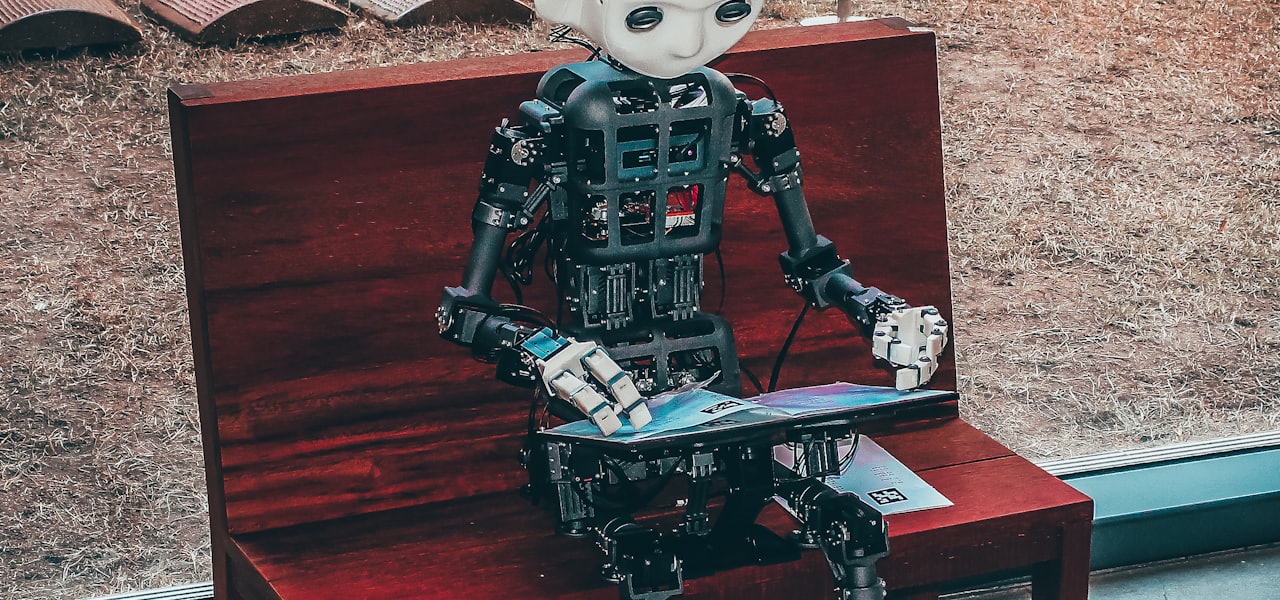
A percept is the input that an intelligent agent is perceiving at any given moment. It is essentially the same concept as a percept in psychology, except that it is being perceived not by the brain but by the agent. A percept is detected by a sensor, often a camera, processed accordingly, and acted upon by an actuator. Each percept is added to a "percept sequence", which is a complete history of each percept ever detected. The agent's action at any instant point may depend on the entire percept sequence up to that particular instant point. An intelligent agent chooses how to act not only based on the current percept, but the percept sequence. The next action is chosen by the agent function, which maps every percept to an action. For example, if a camera were to record a gesture, the agent would process the percepts, calculate the corresponding spatial vectors, examine its percept history, and use the agent program (the application of the agent function) to act accordingly. == Examples == Examples of percepts include inputs from touch sensors, cameras, infrared sensors, sonar, microphones, mice, and keyboards. A percept can also be a higher-level feature of the data, such as lines, depth, objects, faces, or gestures.