Sanad (Arabic: سند) is the official digital identity and e-government services application of the Hashemite Kingdom of Jordan. Developed and managed by the Ministry of Digital Economy and Entrepreneurship, the app provides a unified platform for accessing a range of public services and personal records digitally. == Overview == Launched in February 2020, Sanad is part of Jordan's broader digital transformation strategy aimed at improving public service delivery and enhancing administrative efficiency. The app allows users to authenticate their identity digitally and access over 550 services from more than 50 government and private sector entities. == Features == Sanad provides a wide array of services, including: Viewing and managing official digital documents Applying for government services (e.g., jordanian passport issuance or renewal, health insurance) Accessing personal records (e.g., pension, property ownership) Digitally signing documents Paying utility bills and traffic fines Receiving and tracking official notifications The app is available on iOS, Android, and HarmonyOS platforms and supports both Arabic and English languages. == Digital Identity == A core feature of Sanad is the digital identity system, which enables secure login and authentication for all integrated services. Users must activate their digital identity at designated Sanad stations across Jordan to access the full suite of services. == Adoption and Impact == As of 2025, more than 1.6 million Jordanians have activated their digital identities through Sanad. The app has played a significant role in streamlining government interactions and reducing the need for in-person visits, especially during the COVID-19 pandemic. == Recent Developments == In 2025, the Ministry launched an updated version of the app with enhanced user experience and new services, including the e-passport issuance feature.
Schema-agnostic databases
Schema-agnostic databases or vocabulary-independent databases aim at supporting users to be abstracted from the representation of the data, supporting the automatic semantic matching between queries and databases. Schema-agnosticism is the property of a database of mapping a query issued with the user terminology and structure, automatically mapping it to the dataset vocabulary. The increase in the size and in the semantic heterogeneity of database schemas bring new requirements for users querying and searching structured data. At this scale it can become unfeasible for data consumers to be familiar with the representation of the data in order to query it. At the center of this discussion is the semantic gap between users and databases, which becomes more central as the scale and complexity of the data grows. == Description == The evolution of data environments towards the consumption of data from multiple data sources and the growth in the schema size, complexity, dynamicity and decentralisation (SCoDD) of schemas increases the complexity of contemporary data management. The SCoDD trend emerges as a central data management concern in Big Data scenarios, where users and applications have a demand for more complete data, produced by independent data sources, under different semantic assumptions and contexts of use, which is the typical scenario for Semantic Web Data applications. The evolution of databases in the direction of heterogeneous data environments strongly impacts the usability, semiotics and semantic assumptions behind existing data accessibility methods such as structured queries, keyword-based search and visual query systems. With schema-less databases containing potentially millions of dynamically changing attributes, it becomes unfeasible for some users to become aware of the 'schema' or vocabulary in order to query the database. At this scale, the effort in understanding the schema in order to build a structured query can become prohibitive. == Schema-agnostic queries == Schema-agnostic queries can be defined as query approaches over structured databases which allow users satisfying complex information needs without the understanding of the representation (schema) of the database. Similarly, Tran et al. defines it as "search approaches, which do not require users to know the schema underlying the data". Approaches such as keyword-based search over databases allow users to query databases without employing structured queries. However, as discussed by Tran et al.: "From these points, users however have to do further navigation and exploration to address complex information needs. Unlike keyword search used on the Web, which focuses on simple needs, the keyword search elaborated here is used to obtain more complex results. Instead of a single set of resources, the goal is to compute complex sets of resources and their relations." The development of approaches to support natural language interfaces (NLI) over databases have aimed towards the goal of schema-agnostic queries. Complementarily, some approaches based on keyword search have targeted keyword-based queries which express more complex information needs. Other approaches have explored the construction of structured queries over databases where schema constraints can be relaxed. All these approaches (natural language, keyword-based search and structured queries) have targeted different degrees of sophistication in addressing the problem of supporting a flexible semantic matching between queries and data, which vary from the completely absence of the semantic concern to more principled semantic models. While the demand for schema-agnosticism has been an implicit requirement across semantic search and natural language query systems over structured data, it is not sufficiently individuated as a concept and as a necessary requirement for contemporary database management systems. Recent works have started to define and model the semantic aspects involved on schema-agnostic queries. === Schema-agnostic structured queries === Consist of schema-agnostic queries following the syntax of a structured standard (for example SQL, SPARQL). The syntax and semantics of operators are maintained, while different terminologies are used. ==== Example 1 ==== SELECT ?y { BillClinton hasDaughter ?x . ?x marriedTo ?y . } which maps to the following SPARQL query in the dataset vocabulary: ==== Example 2 ==== which maps to the following SPARQL query in the dataset vocabulary: === Schema-agnostic keyword queries === Consist of schema-agnostic queries using keyword queries. In this case the syntax and semantics of operators are different from the structured query syntax. ==== Example ==== "Bill Clinton daughter married to" "Books by William Goldman with more than 300 pages" == Semantic complexity == As of 2016 the concept of schema-agnostic queries has been developed primarily in academia. Most of schema-agnostic query systems have been investigated in the context of Natural Language Interfaces over databases or over the Semantic Web. These works explore the application of semantic parsing techniques over large, heterogeneous and schema-less databases. More recently, the individuation of the concept of schema-agnostic query systems and databases have appeared more explicitly within the literature. Freitas et al. provide a probabilistic model on the semantic complexity of mapping schema-agnostic queries.
Autonomous things
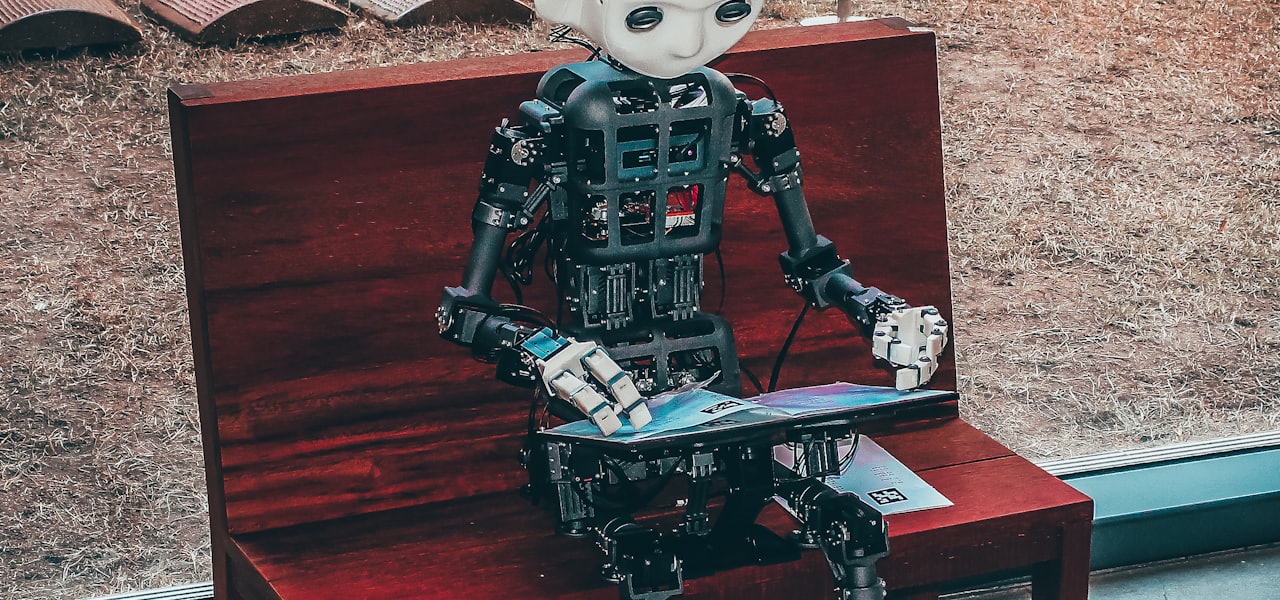
Autonomous things, abbreviated AuT, or the Internet of autonomous things, abbreviated as IoAT, is an emerging term for the technological developments that are expected to bring computers into the physical environment as autonomous entities without human direction, freely moving and interacting with humans and other objects. Self-navigating drones are the first AuT technology in (limited) deployment. It is expected that the first mass-deployment of AuT technologies will be the autonomous car, generally expected to be available around 2020. Other currently expected AuT technologies include home robotics (e.g., machines that provide care for the elderly, infirm or young), and military robots (air, land or sea autonomous machines with information-collection or target-attack capabilities). AuT technologies share many common traits, which justify the common notation. They are all based on recent breakthroughs in the domains of (deep) machine learning and artificial intelligence. They all require extensive and prompt regulatory developments to specify the requirements from them and to license and manage their deployment (see the further reading below). And they all require unprecedented levels of safety (e.g., automobile safety) and security, to overcome concerns about the potential negative impact of the new technology. As an example, the autonomous car both addresses the main existing safety issues and creates new issues. It is expected to be much safer than existing vehicles, by eliminating the single most dangerous element – the driver. The US's National Highway Traffic Safety Administration estimates 94 percent of US accidents were the result of human error and poor decision-making, including speeding and impaired driving, and the Center for Internet and Society at Stanford Law School claims that "Some ninety percent of motor vehicle crashes are caused at least in part by human error". So while safety standards like the ISO 26262 specify the required safety, there is still a burden on the industry to demonstrate acceptable safety. While car accidents claim every year 35,000 lives in the US, and 1.25 million worldwide, some believe that even "a car that's 10 times as safe, which means 3,500 people die on the roads each year [in the US alone]" would not be accepted by the public. The acceptable level may be closer to the current figures on aviation accidents and incidents, with under a thousand worldwide deaths in most years – three orders of magnitude lower than cars. This underscores the unprecedented nature of the safety requirements that will need to be met for cars, with similar levels of safety expected for other Autonomous Things.
Outline of robotics
The following outline is provided as an overview of and topical guide to robotics: Robotics is a branch of mechanical engineering, electrical engineering and computer science that deals with the design, construction, operation, and application of robots, as well as computer systems for their control, sensory feedback, and information processing. These technologies deal with automated machines that can take the place of humans in dangerous environments or manufacturing processes, or resemble humans in appearance, behaviour, and or cognition. Many of today's robots are inspired by nature contributing to the field of bio-inspired robotics. The word "robot" was introduced to the public by Czech writer Karel Čapek in his play R.U.R. (Rossum's Universal Robots), published in 1920. The term "robotics" was coined by Isaac Asimov in his 1941 science fiction short-story "Liar!" == Nature of robotics == Robotics can be described as: An applied science – scientific knowledge transferred into a physical environment. A branch of computer science – A branch of electrical engineering – A branch of mechanical engineering – Research and development – A branch of technology – == Branches of robotics == Adaptive control – control method used by a controller which must adapt to a controlled system with parameters which vary, or are initially uncertain. For example, as an aircraft flies, its mass will slowly decrease as a result of fuel consumption; a control law is needed that adapts itself to such changing conditions. Aerial robotics – development of unmanned aerial vehicles (UAVs), commonly known as drones, aircraft without a human pilot aboard. Their flight is controlled either autonomously by onboard computers or by the remote control of a pilot on the ground or in another vehicle. Android science – interdisciplinary framework for studying human interaction and cognition based on the premise that a very humanlike robot (that is, an android) can elicit human-directed social responses in human beings. Anthrobotics – science of developing and studying robots that are either entirely or in some way human-like. Artificial intelligence – the intelligence of machines and the branch of computer science that aims to create it. Artificial neural networks – a mathematical model inspired by biological neural networks. Autonomous car – an autonomous vehicle capable of fulfilling the human transportation capabilities of a traditional car Autonomous research robotics – Bayesian network – BEAM robotics – a style of robotics that primarily uses simple analogue circuits instead of a microprocessor in order to produce an unusually simple design (in comparison to traditional mobile robots) that trades flexibility for robustness and efficiency in performing the task for which it was designed. Behavior-based robotics – the branch of robotics that incorporates modular or behavior based AI (BBAI). Bio-inspired robotics – making robots that are inspired by biological systems. Biomimicry and bio-inspired design are sometimes confused. Biomimicry is copying the nature while bio-inspired design is learning from nature and making a mechanism that is simpler and more effective than the system observed in nature. Biomimetic – see Bionics. Biomorphic robotics – a sub-discipline of robotics focused upon emulating the mechanics, sensor systems, computing structures and methodologies used by animals. Bionics – also known as biomimetics, biognosis, biomimicry, or bionical creativity engineering is the application of biological methods and systems found in nature to the study and design of engineering systems and modern technology. Biorobotics – a study of how to make robots that emulate or simulate living biological organisms mechanically or even chemically. Cloud robotics – is a field of robotics that attempts to invoke cloud technologies such as cloud computing, cloud storage, and other Internet technologies centered around the benefits of converged infrastructure and shared services for robotics. Cognitive robotics – views animal cognition as a starting point for the development of robotic information processing, as opposed to more traditional Artificial Intelligence techniques. Clustering – Computational neuroscience – study of brain function in terms of the information processing properties of the structures that make up the nervous system. Robot control – a study of controlling robots Robotics conventions – Data mining Techniques – Degrees of freedom – in mechanics, the degree of freedom (DOF) of a mechanical system is the number of independent parameters that define its configuration. It is the number of parameters that determine the state of a physical system and is important to the analysis of systems of bodies in mechanical engineering, aeronautical engineering, robotics, and structural engineering. Developmental robotics – a methodology that uses metaphors from neural development and developmental psychology to develop the mind for autonomous robots Digital control – a branch of control theory that uses digital computers to act as system controllers. Digital image processing – the use of computer algorithms to perform image processing on digital images. Dimensionality reduction – the process of reducing the number of random variables under consideration, and can be divided into feature selection and feature extraction. Distributed robotics – Electronic stability control – is a computerized technology that improves the safety of a vehicle's stability by detecting and reducing loss of traction (skidding). Evolutionary computation – Evolutionary robotics – a methodology that uses evolutionary computation to develop controllers for autonomous robots Extended Kalman filter – Flexible Distribution functions – Feedback control and regulation – Human–computer interaction – a study, planning and design of the interaction between people (users) and computers Human robot interaction – a study of interactions between humans and robots Intelligent vehicle technologies – comprise electronic, electromechanical, and electromagnetic devices - usually silicon micromachined components operating in conjunction with computer controlled devices and radio transceivers to provide precision repeatability functions (such as in robotics artificial intelligence systems) emergency warning validation performance reconstruction. Computer vision – Machine vision – Kinematics – study of motion, as applied to robots. This includes both the design of linkages to perform motion, their power, control and stability; also their planning, such as choosing a sequence of movements to achieve a broader task. Laboratory robotics – the act of using robots in biology or chemistry labs Robot learning – learning to perform tasks such as obstacle avoidance, control and various other motion-related tasks Direct manipulation interface – In computer science, direct manipulation is a human–computer interaction style which involves continuous representation of objects of interest and rapid, reversible, and incremental actions and feedback. The intention is to allow a user to directly manipulate objects presented to them, using actions that correspond at least loosely to the physical world. Manifold learning – Microrobotics – a field of miniature robotics, in particular mobile robots with characteristic dimensions less than 1 mm Motion planning – (a.k.a., the "navigation problem", the "piano mover's problem") is a term used in robotics for the process of detailing a task into discrete motions. Motor control – information processing related activities carried out by the central nervous system that organize the musculoskeletal system to create coordinated movements and skilled actions. Nanorobotics – the emerging technology field creating machines or robots whose components are at or close to the scale of a nanometer (10−9 meters). Passive dynamics – refers to the dynamical behavior of actuators, robots, or organisms when not drawing energy from a supply (e.g., batteries, fuel, ATP). Programming by Demonstration – an End-user development technique for teaching a computer or a robot new behaviors by demonstrating the task to transfer directly instead of programming it through machine commands. Quantum robotics – a subfield of robotics that deals with using quantum computers to run robotics algorithms more quickly than digital computers can. Rapid prototyping – automatic construction of physical objects via additive manufacturing from virtual models in computer aided design (CAD) software, transforming them into thin, virtual, horizontal cross-sections and then producing successive layers until the items are complete. As of June 2011, used for making models, prototype parts, and production-quality parts in relatively small numbers. Reinforcement learning – an area of machine learning in computer science, concerned with how an agent ought to take actions in an environment so as to maximize some notion of cumulative reward. Robot
Level-set method
The Level-set method (LSM) is a conceptual framework for using level sets as a tool for numerical analysis of surfaces and shapes. LSM can perform numerical computations involving curves and surfaces on a fixed Cartesian grid without having to parameterize these objects. LSM makes it easier to perform computations on shapes with sharp corners and shapes that change topology (such as by splitting in two or developing holes). These characteristics make LSM effective for modeling objects that vary in time, such as an airbag inflating or a drop of oil floating in water. == Overview == The figure on the right illustrates several ideas about LSM. In the upper left corner is a bounded region with a well-behaved boundary. Below it, the red surface is the graph of a level set function φ {\displaystyle \varphi } determining this shape, and the flat blue region represents the X-Y plane. The boundary of the shape is then the zero-level set of φ {\displaystyle \varphi } , while the shape itself is the set of points in the plane for which φ {\displaystyle \varphi } is positive (interior of the shape) or zero (at the boundary). In the top row, the shape's topology changes as it is split in two. It is challenging to describe this transformation numerically by parameterizing the boundary of the shape and following its evolution. An algorithm can be used to detect the moment the shape splits in two and then construct parameterizations for the two newly obtained curves. On the bottom row, however, the plane at which the level set function is sampled is translated upwards, on which the shape's change in topology is described. It is less challenging to work with a shape through its level-set function rather than with itself directly, in which a method would need to consider all the possible deformations the shape might undergo. Thus, in two dimensions, the level-set method amounts to representing a closed curve Γ {\displaystyle \Gamma } (such as the shape boundary in our example) using an auxiliary function φ {\displaystyle \varphi } , called the level-set function. The curve Γ {\displaystyle \Gamma } is represented as the zero-level set of φ {\displaystyle \varphi } by Γ = { ( x , y ) ∣ φ ( x , y ) = 0 } , {\displaystyle \Gamma =\{(x,y)\mid \varphi (x,y)=0\},} and the level-set method manipulates Γ {\displaystyle \Gamma } implicitly through the function φ {\displaystyle \varphi } . This function φ {\displaystyle \varphi } is assumed to take positive values inside the region delimited by the curve Γ {\displaystyle \Gamma } and negative values outside. == The level-set equation == If the curve Γ {\displaystyle \Gamma } moves in the normal direction with a speed v {\displaystyle v} , then by chain rule and implicit differentiation, it can be determined that the level-set function φ {\displaystyle \varphi } satisfies the level-set equation ∂ φ ∂ t = v | ∇ φ | . {\displaystyle {\frac {\partial \varphi }{\partial t}}=v|\nabla \varphi |.} Here, | ⋅ | {\displaystyle |\cdot |} is the Euclidean norm (denoted customarily by single bars in partial differential equations), and t {\displaystyle t} is time. This is a partial differential equation, in particular a Hamilton–Jacobi equation, and can be solved numerically, for example, by using finite differences on a Cartesian grid. However, the numerical solution of the level set equation may require advanced techniques. Simple finite difference methods fail quickly. Upwinding methods such as the Godunov method are considered better; however, the level set method does not guarantee preservation of the volume and shape of the set level in an advection field that maintains shape and size, for example, a uniform or rotational velocity field. Instead, the shape of the level set may become distorted, and the level set may disappear over a few time steps. Therefore, high-order finite difference schemes, such as high-order essentially non-oscillatory (ENO) schemes, are often required, and even then, the feasibility of long-term simulations is questionable. More advanced methods have been developed to overcome this; for example, combinations of the leveling method with tracking marker particles suggested by the velocity field. == Example == Consider a unit circle in R 2 {\textstyle \mathbb {R} ^{2}} , shrinking in on itself at a constant rate, i.e. each point on the boundary of the circle moves along its inwards pointing normally at some fixed speed. The circle will shrink and eventually collapse down to a point. If an initial distance field is constructed (i.e. a function whose value is the signed Euclidean distance to the boundary, positive interior, negative exterior) on the initial circle, the normalized gradient of this field will be the circle normal. If the field has a constant value subtracted from it in time, the zero level (which was the initial boundary) of the new fields will also be circular and will similarly collapse to a point. This is due to this being effectively the temporal integration of the Eikonal equation with a fixed front velocity. == Applications == In mathematical modeling of combustion, LSM is used to describe the instantaneous flame surface, known as the G equation. Level-set data structures have been developed to facilitate the use of the level-set method in computer applications. Computational fluid dynamics Trajectory planning Optimization Image processing Computational biophysics Discrete complex dynamics (visualization of the parameter plane and the dynamic plane) == History == The level-set method was developed in 1979 by Alain Dervieux, and subsequently popularized by Stanley Osher and James Sethian. It has since become popular in many disciplines, such as image processing, computer graphics, computational geometry, optimization, computational fluid dynamics, and computational biology.
Computer Graphics: Principles and Practice
Computer Graphics: Principles and Practice is a textbook written by James D. Foley, Andries van Dam, Steven K. Feiner, John Hughes, Morgan McGuire, David F. Sklar, and Kurt Akeley and published by Addison–Wesley. First published in 1982 as Fundamentals of Interactive Computer Graphics, it is widely considered a classic standard reference book on the topic of computer graphics. It is sometimes known as the bible of computer graphics (due to its size). == Editions == === First Edition === The first edition, published in 1982 and titled Fundamentals of Interactive Computer Graphics, discussed the SGP library, which was based on ACM's SIGGRAPH CORE 1979 graphics standard, and focused on 2D vector graphics. === Second Edition === The second edition, published 1990, was completely rewritten and covered 2D and 3D raster and vector graphics, user interfaces, geometric modeling, anti-aliasing, advanced rendering algorithms and an introduction to animation. The SGP library was replaced by SRGP (Simple Raster Graphics Package), a library for 2D raster primitives and interaction handling, and SPHIGS (Simple PHIGS), a library for 3D primitives, which were specifically written for the book. === Second Edition in C === In the second edition in C, published in 1995, all examples were converted from Pascal to C. New implementations for the SRGP and SPHIGS graphics packages in C were also provided. === Third Edition === A third edition covering modern GPU architecture was released in July 2013. Examples in the third edition are written in C++, C#, WPF, GLSL, OpenGL, G3D, or pseudocode. == Awards == The book has won a Front Line Award (Hall of Fame) in 1998.
Motor theory of speech perception
The motor theory of speech perception is the hypothesis that people perceive spoken words by identifying the vocal tract gestures with which they are pronounced rather than by identifying the sound patterns that speech generates. It originally claimed that speech perception is done through a specialized module that is innate and human-specific. Though the idea of a module has been qualified in more recent versions of the theory, the idea remains that the role of the speech motor system is not only to produce speech articulations but also to detect them. The hypothesis has gained more interest outside the field of speech perception than inside. This has increased particularly since the discovery of mirror neurons that link the production and perception of motor movements, including those made by the vocal tract. The theory was initially proposed in the Haskins Laboratories in the 1950s by Alvin Liberman and Franklin S. Cooper, and developed further by Donald Shankweiler, Michael Studdert-Kennedy, Ignatius Mattingly, Carol Fowler and Douglas Whalen. == Origins and development == The hypothesis has its origins in research using pattern playback to create reading machines for the blind that would substitute sounds for orthographic letters. This led to a close examination of how spoken sounds correspond to the acoustic spectrogram of them as a sequence of auditory sounds. This found that successive consonants and vowels overlap in time with one another (a phenomenon known as coarticulation). This suggested that speech is not heard like an acoustic "alphabet" or "cipher," but as a "code" of overlapping speech gestures. === Associationist approach === Initially, the theory was associationist: infants mimic the speech they hear and that this leads to behavioristic associations between articulation and its sensory consequences. Later, this overt mimicry would be short-circuited and become speech perception. This aspect of the theory was dropped, however, with the discovery that prelinguistic infants could already detect most of the phonetic contrasts used to separate different speech sounds. === Cognitivist approach === The behavioristic approach was replaced by a cognitivist one in which there was a speech module. The module detected speech in terms of hidden distal objects rather than at the proximal or immediate level of their input. The evidence for this was the research finding that speech processing was special such as duplex perception. === Changing distal objects === Initially, speech perception was assumed to link to speech objects that were both the invariant movements of speech articulators the invariant motor commands sent to muscles to move the vocal tract articulators This was later revised to include the phonetic gestures rather than motor commands, and then the gestures intended by the speaker at a prevocal, linguistic level, rather than actual movements. === Modern revision === The "speech is special" claim has been dropped, as it was found that speech perception could occur for nonspeech sounds (for example, slamming doors for duplex perception). === Mirror neurons === The discovery of mirror neurons has led to renewed interest in the motor theory of speech perception, and the theory still has its advocates, although there are also critics. == Support == === Nonauditory gesture information === If speech is identified in terms of how it is physically made, then nonauditory information should be incorporated into speech percepts even if it is still subjectively heard as "sounds". This is, in fact, the case. The McGurk effect shows that seeing the production of a spoken syllable that differs from an auditory cue synchronized with it affects the perception of the auditory one. In other words, if someone hears "ba" but sees a video of someone pronouncing "ga", what they hear is different—some people believe they hear "da". People find it easier to hear speech in noise if they can see the speaker. People can hear syllables better when their production can be felt haptically. === Categorical perception === Using a speech synthesizer, speech sounds can be varied in place of articulation along a continuum from /bɑ/ to /dɑ/ to /ɡɑ/, or in voice onset time on a continuum from /dɑ/ to /tɑ/ (for example). When listeners are asked to discriminate between two different sounds, they perceive sounds as belonging to discrete categories, even though the sounds vary continuously. In other words, 10 sounds (with the sound on one extreme being /dɑ/ and the sound on the other extreme being /tɑ/, and the ones in the middle varying on a scale) may all be acoustically different from one another, but the listener will hear all of them as either /dɑ/ or /tɑ/. Likewise, the English consonant /d/ may vary in its acoustic details across different phonetic contexts (the /d/ in /du/ does not technically sound the same as the one in /di/, for example), but all /d/'s as perceived by a listener fall within one category (voiced alveolar plosive) and that is because "linguistic representations are abstract, canonical, phonetic segments or the gestures that underlie these segments." This suggests that humans identify speech using categorical perception, and thus that a specialized module, such as that proposed by the motor theory of speech perception, may be on the right track. === Speech imitation === If people can hear the gestures in speech, then the imitation of speech should be very fast, as in when words are repeated that are heard in headphones as in speech shadowing. People can repeat heard syllables more quickly than they would be able to produce them normally. === Speech production === Hearing speech activates vocal tract muscles, and the motor cortex and premotor cortex. The integration of auditory and visual input in speech perception also involves such areas. Disrupting the premotor cortex disrupts the perception of speech units such as plosives. The activation of the motor areas occurs in terms of the phonemic features which link with the vocal track articulators that create speech gestures. The perception of a speech sound is aided by pre-emptively stimulating the motor representation of the articulators responsible for its pronunciation . Auditory and motor cortical coupling is restricted to a specific range of neuronal firing frequency. === Perception-action meshing === Evidence exists that perception and production are generally coupled in the motor system. This is supported by the existence of mirror neurons that are activated both by seeing (or hearing) an action and when that action is carried out. Another source of evidence is that for common coding theory between the representations used for perception and action. == Criticisms == The motor theory of speech perception is not widely held in the field of speech perception, though it is more popular in other fields, such as theoretical linguistics. As three of its advocates have noted, "it has few proponents within the field of speech perception, and many authors cite it primarily to offer critical commentary".p. 361 Several critiques of it exist. === Multiple sources === Speech perception is affected by nonproduction sources of information, such as context. Individual words are hard to understand in isolation but easy when heard in sentence context. It therefore seems that speech perception uses multiple sources that are integrated together in an optimal way. === Production === The motor theory of speech perception would predict that speech motor abilities in infants predict their speech perception abilities, but in actuality it is the other way around. It would also predict that defects in speech production would impair speech perception, but they do not. However, this only affects the first and already superseded behaviorist version of the theory, where infants were supposed to learn all production-perception patterns by imitation early in childhood. This is no longer the mainstream view of motor-speech theorists. === Speech module === Several sources of evidence for a specialized speech module have failed to be supported. Duplex perception can be observed with door slams. The McGurk effect can also be achieved with nonlinguistic stimuli, such as showing someone a video of a basketball bouncing but playing the sound of a ping-pong ball bouncing. As for categorical perception, listeners can be sensitive to acoustic differences within single phonetic categories. As a result, this part of the theory has been dropped by some researchers. === Sublexical tasks === The evidence provided for the motor theory of speech perception is limited to tasks such as syllable discrimination that use speech units not full spoken words or spoken sentences. As a result, "speech perception is sometimes interpreted as referring to the perception of speech at the sublexical level. However, the ultimate goal of these studies is presumably to understand the neural processes supporting the ability to process spee