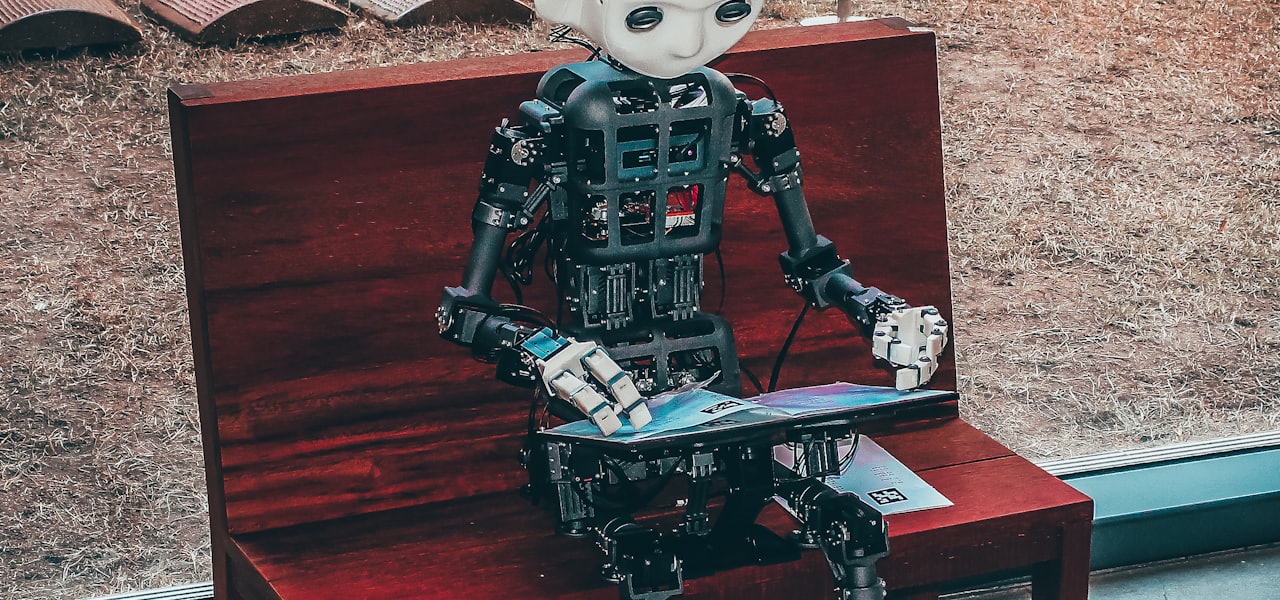
In computer science and mathematical logic, a proof assistant or interactive theorem prover is a software tool to assist with the development of formal proofs by human–machine collaboration. This involves some sort of interactive proof editor, or other interface, with which a human can guide the search for proofs, the details of which are stored in, and some steps provided by, a computer. A recent effort within this field is making these tools use artificial intelligence to automate the formalization of ordinary mathematics. == Automated proof checking == Automated proof checking is the process of using software for checking proofs for correctness. It is one of the most developed fields in automated reasoning. Automated proof checking differs from automated theorem proving in that automated proof checking simply mechanically checks the formal workings of an existing proof, instead of trying to develop new proofs or theorems itself. Because of this, the task of automated proof verification is much simpler than that of automated theorem proving, allowing automated proof checking software to be much simpler than automated theorem proving software. Because of this small size, some automated proof checking systems can have less than a thousand lines of core code, and are thus themselves amenable to both hand-checking and automated software verification. The Mizar system, HOL Light, and Metamath are examples of automated proof checking systems. Automated proof checking can be done either as a batch operation, or interactively, as part of an interactive theorem proving system. == History == Automath, which was developed by Nicolaas Govert de Bruijn starting in 1967, is often considered the first proof checker and the first system to utilize the Curry–Howard correspondence between programs and proofs. Automath was used by L.S. van Benthem Jutting in 1977 to formalize Landau's Foundations of Analysis, which was the first formalization of the real numbers. In 1973, Robert Boyer and J Moore published Proving Theorems about LISP Functions which aimed to verify programs, not mathematics. Their theorem prover is now known as ACL2. In the 1970s, Edinburgh LCF introduced the idea of using a functional programming language as the metalanguage for a theorem prover, and led to the HOL family of proof assistants. The 1990s saw the rise of Rocq, (then known as Coq), which has been used for many large-scale formalization projects. Since the late 2010s, Lean, a proof assistant strongly influenced by Rocq, has become another popular choice, especially for formalizing mathematics. == System comparison == ACL2 – a programming language, a first-order logical theory, and a theorem prover (with both interactive and automatic modes) in the Boyer–Moore tradition. HOL theorem provers – A family of tools ultimately derived from the LCF theorem prover. In these systems, the logical core is a library of their programming language. Theorems represent new elements of the language and can only be introduced via "strategies" which guarantee logical correctness. Strategy composition gives users the ability to produce significant proofs with relatively few interactions with the system. Members of the family include: HOL4 – The "primary descendant", still under active development. Support for both Moscow ML and Poly/ML. Has a BSD-style license. HOL Light – A thriving "minimalist fork". OCaml based. ProofPower – Went proprietary, then returned to open source. Based on Standard ML. IMPS, An Interactive Mathematical Proof System. Isabelle is an interactive theorem prover where other systems can be encoded. Isabelle/HOL is its most popular instance, whose foundation is close to that of the HOL prover. Other instances include Isabelle/ZF and Isabelle/FOL. The main code-base is BSD-licensed, but the Isabelle distribution bundles many add-on tools with different licenses. Jape – Java based. Lean is both an interactive theorem prover and a functional, dependently-typed programming language. It is based on the calculus of inductive constructions with non-cumulative universes. Since version 4 (released in 2023), it is self-hosting. It can be used to formalise mathematics (and has a large, coherent library for formal mathematics), but also for software and hardware verification. LEGO Matita – A light system based on the calculus of inductive constructions. MINLOG – A proof assistant based on first-order minimal logic. Mizar – A proof assistant based on first-order logic, in a natural deduction style, and Tarski–Grothendieck set theory. PhoX – A proof assistant based on higher-order logic which is eXtensible. Prototype Verification System (PVS) – a proof language and system based on higher-order logic. Rocq (formerly named Coq) – A popular interactive theorem prover based on the calculus of inductive constructions. Theorem Proving System (TPS) and ETPS – Interactive theorem provers also based on simply typed lambda calculus, but based on an independent formulation of the logical theory and independent implementation. == User interfaces == A commonly used front-end for proof assistants was the Emacs-based Proof General, developed at the University of Edinburgh. Nowadays, many provers include their own editor. Rocq includes RocqIDE, which is based on OCaml/Gtk. Isabelle includes Isabelle/jEdit, which is based on jEdit and the Isabelle/Scala infrastructure for document-oriented proof processing. More recently, Visual Studio Code extensions have been developed for Rocq, Isabelle by Makarius Wenzel, and for Lean 4 by the leanprover developers. == Formalization extent == Freek Wiedijk has been keeping a ranking of proof assistants by the amount of formalized theorems out of a list of 100 well-known theorems. As of September 2025, only six systems have formalized proofs of more than 70% of the theorems, namely Isabelle, HOL Light, Lean, Rocq, Metamath and Mizar. == Notable formalized proofs == The following is a list of notable proofs that have been formalized within proof assistants.
Symbolic artificial intelligence
In artificial intelligence, symbolic artificial intelligence (also known as classical artificial intelligence or logic-based artificial intelligence) is the term for the collection of all methods in artificial intelligence research that are based on high-level symbolic (human-readable) representations of problems, logic, and search. Symbolic AI used tools such as logic programming, production rules, semantic nets and frames, and it developed applications such as knowledge-based systems (in particular, expert systems), symbolic mathematics, automated theorem provers, ontologies, the semantic web, and automated planning and scheduling systems. The Symbolic AI paradigm led to important ideas in search, symbolic programming languages, agents, multi-agent systems, the semantic web, and the strengths and limitations of formal knowledge and reasoning systems. Symbolic AI was the dominant paradigm of AI research from the mid-1950s until the mid-1990s. Researchers in the 1960s and the 1970s were convinced that symbolic approaches would eventually succeed in creating a machine with artificial general intelligence and considered this the ultimate goal of their field. An early boom, with early successes such as the Logic Theorist and Samuel's Checkers Playing Program, led to unrealistic expectations and promises and was followed by the first AI Winter as funding dried up. A second boom (1969–1986) occurred with the rise of expert systems, their promise of capturing corporate expertise, and an enthusiastic corporate embrace. That boom, and some early successes, e.g., with XCON at DEC, was followed again by later disappointment. Problems with difficulties in knowledge acquisition, maintaining large knowledge bases, and brittleness in handling out-of-domain problems arose. Another, second, AI Winter (1988–2011) followed. Subsequently, AI researchers focused on addressing underlying problems in handling uncertainty and in knowledge acquisition. Uncertainty was addressed with formal methods such as hidden Markov models, Bayesian reasoning, and statistical relational learning. Symbolic machine learning addressed the knowledge acquisition problem with contributions including Version Space, Valiant's PAC learning, Quinlan's ID3 decision-tree learning, case-based learning, and inductive logic programming to learn relations. Neural networks, a subsymbolic approach, had been pursued from early days and reemerged strongly in 2012. Early examples are Rosenblatt's perceptron learning work, the backpropagation work of Rumelhart, Hinton and Williams, and work in convolutional neural networks by LeCun et al. in 1989. However, neural networks were not viewed as successful until about 2012: "Until Big Data became commonplace, the general consensus in the Al community was that the so-called neural-network approach was hopeless. Systems just didn't work that well, compared to other methods. ... A revolution came in 2012, when a number of people, including a team of researchers working with Hinton, worked out a way to use the power of GPUs to enormously increase the power of neural networks." Over the next several years, deep learning had spectacular success in handling vision, speech recognition, speech synthesis, image generation, and machine translation, though symbolic approaches continue to be useful in a few domains such as computer algebra systems and proof assistants. == History == A short history of symbolic AI to the present day follows below. Time periods and titles are drawn from Henry Kautz's 2020 AAAI Robert S. Engelmore Memorial Lecture and the longer Wikipedia article on the History of AI, with dates and titles differing slightly for increased clarity. === The first AI summer: irrational exuberance, 1948–1966 === Success at early attempts in AI occurred in three main areas: artificial neural networks, knowledge representation, and heuristic search, contributing to high expectations. This section summarizes Kautz's reprise of early AI history. ==== Approaches inspired by human or animal cognition or behavior ==== Cybernetic approaches attempted to replicate the feedback loops between animals and their environments. A robotic turtle, with sensors, motors for driving and steering, and seven vacuum tubes for control, based on a preprogrammed neural net, was built as early as 1948. This work can be seen as an early precursor to later work in neural networks, reinforcement learning, and situated robotics. An important early symbolic AI program was the Logic theorist, written by Allen Newell, Herbert Simon and Cliff Shaw in 1955–56, as it was able to prove 38 elementary theorems from Whitehead and Russell's Principia Mathematica. Newell, Simon, and Shaw later generalized this work to create a domain-independent problem solver, GPS (General Problem Solver). GPS solved problems represented with formal operators via state-space search using means-ends analysis. During the 1960s, symbolic approaches achieved great success at simulating intelligent behavior in structured environments such as game-playing, symbolic mathematics, and theorem-proving. AI research was concentrated in four institutions in the 1960s: Carnegie Mellon University, Stanford, MIT and (later) University of Edinburgh. Each one developed its own style of research. Earlier approaches based on cybernetics or artificial neural networks were abandoned or pushed into the background. Herbert Simon and Allen Newell studied human problem-solving skills and attempted to formalize them, and their work laid the foundations of the field of artificial intelligence, as well as cognitive science, operations research and management science. Their research team used the results of psychological experiments to develop programs that simulated the techniques that people used to solve problems. This tradition, centered at Carnegie Mellon University would eventually culminate in the development of the Soar architecture in the middle 1980s. ==== Heuristic search ==== In addition to the highly specialized domain-specific kinds of knowledge that we will see later used in expert systems, early symbolic AI researchers discovered another more general application of knowledge. These were called heuristics, rules of thumb that guide a search in promising directions: "How can non-enumerative search be practical when the underlying problem is exponentially hard? The approach advocated by Simon and Newell is to employ heuristics: fast algorithms that may fail on some inputs or output suboptimal solutions." Another important advance was to find a way to apply these heuristics that guarantees a solution will be found, if there is one, not withstanding the occasional fallibility of heuristics: "The A algorithm provided a general frame for complete and optimal heuristically guided search. A is used as a subroutine within practically every AI algorithm today but is still no magic bullet; its guarantee of completeness is bought at the cost of worst-case exponential time. ==== Early work on knowledge representation and reasoning ==== Early work covered both applications of formal reasoning emphasizing first-order logic, along with attempts to handle common-sense reasoning in a less formal manner. ===== Modeling formal reasoning with logic: the "neats" ===== Unlike Simon and Newell, John McCarthy felt that machines did not need to simulate the exact mechanisms of human thought, but could instead try to find the essence of abstract reasoning and problem-solving with logic, regardless of whether people used the same algorithms. His laboratory at Stanford (SAIL) focused on using formal logic to solve a wide variety of problems, including knowledge representation, planning and learning. Logic was also the focus of the work at the University of Edinburgh and elsewhere in Europe which led to the development of the programming language Prolog and the science of logic programming. ===== Modeling implicit common-sense knowledge with frames and scripts: the "scruffies" ===== Researchers at MIT (such as Marvin Minsky and Seymour Papert) found that solving difficult problems in vision and natural language processing required ad hoc solutions—they argued that no simple and general principle (like logic) would capture all the aspects of intelligent behavior. Roger Schank described their "anti-logic" approaches as "scruffy" (as opposed to the "neat" paradigms at CMU and Stanford). Commonsense knowledge bases (such as Doug Lenat's Cyc) are an example of "scruffy" AI, since they must be built by hand, one complicated concept at a time. === The first AI winter: crushed dreams, 1967–1977 === The first AI winter was a shock: During the first AI summer, many people thought that machine intelligence could be achieved in just a few years. The Defense Advance Research Projects Agency (DARPA) launched programs to support AI research to use AI to solve problems of national security; in particular, to automate the translation of Russian to English for inte
PNGOUT
PNGOUT is a freeware command line optimizer for PNG images written by Ken Silverman. The transformation is lossless, meaning that the resulting image is visually identical to the source image. According to its author, this program can often get higher compression than other optimizers by 5–10%. It is possible to compress some inflated PNGs to a size below 1% of the original file. PNGOUT was also available as a plug-in for the freeware image viewer IrfanView and can be enabled as an option when saving files. It allows editing of various PNGOUT settings via a dialog box. PNGOUT integration was removed in IrfanView version 4.58 in favour of OptiPNG. In 2006, a commercial version of PNGOUT with a graphical user interface, known as PNGOUTWin, was released by Ardfry Imaging, a small company Silverman co-founded in 2005. There is also a freeware GUI frontend to PNGOUT available, known as PNGGauntlet. == Main operation == The main function of PNGOUT is to reduce the size of image data contained in the IDAT chunk. This chunk is compressed using the deflate algorithm. Deflate algorithms can vary in speed and compression ratio, with higher compression ratios generally implying lower speed. Ken Silverman wrote a deflate compressor for PNGOUT that is slower than the ones used in most graphics software, but produces smaller files. PNGOUT also performs automatic bit depth, color, and palette reduction where appropriate.
Nvidia Omniverse
Omniverse is a real-time 3D graphics collaboration platform created by Nvidia. It has been used for applications in the visual effects and "digital twin" industrial simulation industries. Omniverse makes extensive use of the Universal Scene Description (USD) format. == Third-party Integrations == Omniverse supports integration with external computer-aided design tools through third-party connectors. For example, academic work has demonstrated a connector linking Omniverse with the open-source CAD system FreeCAD, enabling collaborative access to CAD geometry via the Omniverse Nucleus server and extending Omniverse usage beyond media and entertainment workflows.
Structural similarity index measure
The structural similarity index measure (SSIM) is a method for predicting the perceived quality of digital television and cinematic pictures, as well as other kinds of digital images and videos. It is also used for measuring the similarity between two images. The SSIM index is a full reference metric; in other words, the measurement or prediction of image quality is based on an initial uncompressed or distortion-free image as reference. SSIM is a perception-based model that considers image degradation as perceived change in structural information, while also incorporating important perceptual phenomena, including both luminance masking and contrast masking terms. This distinguishes from other techniques such as mean squared error (MSE) or peak signal-to-noise ratio (PSNR) that instead estimate absolute errors. Structural information is the idea that the pixels have strong inter-dependencies especially when they are spatially close. These dependencies carry important information about the structure of the objects in the visual scene. Luminance masking is a phenomenon whereby image distortions (in this context) tend to be less visible in bright regions, while contrast masking is a phenomenon whereby distortions become less visible where there is significant activity or "texture" in the image. == History == The predecessor of SSIM was called Universal Quality Index (UQI), or Wang–Bovik index, which was developed by Zhou Wang and Alan Bovik in 2001. This evolved, through their collaboration with Hamid Sheikh and Eero Simoncelli, into the current version of SSIM, which was published in April 2004 in the IEEE Transactions on Image Processing. In addition to defining the SSIM quality index, the paper provides a general context for developing and evaluating perceptual quality measures, including connections to human visual neurobiology and perception, and direct validation of the index against human subject ratings. The basic model was developed in the Laboratory for Image and Video Engineering (LIVE) at The University of Texas at Austin and further developed jointly with the Laboratory for Computational Vision (LCV) at New York University. Further variants of the model have been developed in the Image and Visual Computing Laboratory at University of Waterloo and have been commercially marketed. SSIM subsequently found strong adoption in the image processing community and in the television and social media industries. The 2004 SSIM paper has been cited over 50,000 times according to Google Scholar, making it one of the highest cited papers in the image processing and video engineering fields. It was recognized with the IEEE Signal Processing Society Best Paper Award for 2009. It also received the IEEE Signal Processing Society Sustained Impact Award for 2016, indicative of a paper having an unusually high impact for at least 10 years following its publication. Because of its high adoption by the television industry, the authors of the original SSIM paper were each accorded a Primetime Engineering Emmy Award in 2015 by the Television Academy. == Algorithm == The SSIM index is calculated between two windows of pixel values x {\displaystyle x} and y {\displaystyle y} of common size, from corresponding locations in two images to be compared. These SSIM values can be aggregated across the full images by averaging or other variations. === Special-case formula === In one simple special case, further explained in the next section, the SSIM measure between x {\displaystyle x} and y {\displaystyle y} is: SSIM ( x , y ) = ( 2 μ x μ y + c 1 ) ( 2 σ x y + c 2 ) ( μ x 2 + μ y 2 + c 1 ) ( σ x 2 + σ y 2 + c 2 ) {\displaystyle {\hbox{SSIM}}(x,y)={\frac {(2\mu _{x}\mu _{y}+c_{1})(2\sigma _{xy}+c_{2})}{(\mu _{x}^{2}+\mu _{y}^{2}+c_{1})(\sigma _{x}^{2}+\sigma _{y}^{2}+c_{2})}}} with: μ x {\displaystyle \mu _{x}} the pixel sample mean of x {\displaystyle x} ; μ y {\displaystyle \mu _{y}} the pixel sample mean of y {\displaystyle y} ; σ x 2 {\displaystyle \sigma _{x}^{2}} the sample variance of x {\displaystyle x} ; σ y 2 {\displaystyle \sigma _{y}^{2}} the sample variance of y {\displaystyle y} ; σ x y {\displaystyle \sigma _{xy}} the sample covariance of x {\displaystyle x} and y {\displaystyle y} ; c 1 = ( k 1 L ) 2 {\displaystyle c_{1}=(k_{1}L)^{2}} , c 2 = ( k 2 L ) 2 {\displaystyle c_{2}=(k_{2}L)^{2}} two variables to stabilize the division with weak denominator; L {\displaystyle L} the dynamic range of the pixel-values (typically this is 2 # b i t s p e r p i x e l − 1 {\displaystyle 2^{\#bits\ per\ pixel}-1} ); k 1 = 0.01 {\displaystyle k_{1}=0.01} and k 2 = 0.03 {\displaystyle k_{2}=0.03} by default. === General formula and components === The SSIM formula is based on three comparison measurements between the samples of x {\displaystyle x} and y {\displaystyle y} : luminance ( l {\displaystyle l} ), contrast ( c {\displaystyle c} ), and structure ( s {\displaystyle s} ). The individual comparison functions are: l ( x , y ) = 2 μ x μ y + c 1 μ x 2 + μ y 2 + c 1 {\displaystyle l(x,y)={\frac {2\mu _{x}\mu _{y}+c_{1}}{\mu _{x}^{2}+\mu _{y}^{2}+c_{1}}}} c ( x , y ) = 2 σ x σ y + c 2 σ x 2 + σ y 2 + c 2 {\displaystyle c(x,y)={\frac {2\sigma _{x}\sigma _{y}+c_{2}}{\sigma _{x}^{2}+\sigma _{y}^{2}+c_{2}}}} s ( x , y ) = σ x y + c 3 σ x σ y + c 3 {\displaystyle s(x,y)={\frac {\sigma _{xy}+c_{3}}{\sigma _{x}\sigma _{y}+c_{3}}}} The SSIM for each block is then a weighted combination of those comparative measures: SSIM ( x , y ) = l ( x , y ) α ⋅ c ( x , y ) β ⋅ s ( x , y ) γ {\displaystyle {\text{SSIM}}(x,y)=l(x,y)^{\alpha }\cdot c(x,y)^{\beta }\cdot s(x,y)^{\gamma }} Choosing the third denominator stabilizing constant as: c 3 = c 2 / 2 {\displaystyle c_{3}=c_{2}/2} leads to a simplification when combining the c and s components with equal exponents ( β = γ {\displaystyle \beta =\gamma } ), as the numerator of c is then twice the denominator of s, leading to a cancellation leaving just a 2. Setting the weights (exponents) α , β , γ {\displaystyle \alpha ,\beta ,\gamma } to 1, the formula can then be reduced to the special case shown above. === Mathematical properties === SSIM satisfies the identity of indiscernibles, and symmetry properties, but not the triangle inequality or non-negativity, and thus is not a distance function. However, under certain conditions, SSIM may be converted to a normalized root MSE measure, which is a distance function. The square of such a function is not convex, but is locally convex and quasiconvex, making SSIM a feasible target for optimization. === Application of the formula === In order to evaluate the image quality, this formula is usually applied only on luma, although it may also be applied on color (e.g., RGB) values or chromatic (e.g. YCbCr) values. The resultant SSIM index is a decimal value between -1 and 1, where 1 indicates perfect similarity, 0 indicates no similarity, and -1 indicates perfect anti-correlation. For an image, it is typically calculated using a sliding Gaussian window of size 11×11 or a block window of size 8×8. The window can be displaced pixel-by-pixel on the image to create an SSIM quality map of the image. In the case of video quality assessment, the authors propose to use only a subgroup of the possible windows to reduce the complexity of the calculation. === Variants === ==== Multi-scale SSIM ==== A more advanced form of SSIM, called Multiscale SSIM (MS-SSIM) is conducted over multiple scales through a process of multiple stages of sub-sampling, reminiscent of multiscale processing in the early vision system. It has been shown to perform equally well or better than SSIM on different subjective image and video databases. ==== Multi-component SSIM ==== Three-component SSIM (3-SSIM) is a form of SSIM that takes into account the fact that the human eye can see differences more precisely on textured or edge regions than on smooth regions. The resulting metric is calculated as a weighted average of SSIM for three categories of regions: edges, textures, and smooth regions. The proposed weighting is 0.5 for edges, 0.25 for the textured and smooth regions. The authors mention that a 1/0/0 weighting (ignoring anything but edge distortions) leads to results that are closer to subjective ratings. This suggests that edge regions play a dominant role in image quality perception. The authors of 3-SSIM have also extended the model into four-component SSIM (4-SSIM). The edge types are further subdivided into preserved and changed edges by their distortion status. The proposed weighting is 0.25 for all four components. ==== Structural dissimilarity ==== Structural dissimilarity (DSSIM) may be derived from SSIM, though it does not constitute a distance function as the triangle inequality is not necessarily satisfied. DSSIM ( x , y ) = 1 − SSIM ( x , y ) 2 {\displaystyle {\hbox{DSSIM}}(x,y)={\frac {1-{\hbox{SSIM}}(x,y)}{2}}} ==== Video quality metrics and temporal variants ==== It is worth noting that the original vers
Energy-based model
An energy-based model (EBM), also called Canonical Ensemble Learning (CEL) or Learning via Canonical Ensemble (LCE), is an application of canonical ensemble formulation from statistical physics for learning from data. The approach prominently appears in generative artificial intelligence. EBMs provide a unified framework for many probabilistic and non-probabilistic approaches to such learning, particularly for training graphical and other structured models. An EBM learns the characteristics of a target dataset and generates a similar but larger dataset. EBMs detect the latent variables of a dataset and generate new datasets with a similar distribution. Energy-based generative neural networks is a class of generative models, which aim to learn explicit probability distributions of data in the form of energy-based models, the energy functions of which are parameterized by modern deep neural networks. Boltzmann machines are a special form of energy-based models with a specific parametrization of the energy. == Description == For a given input x {\displaystyle x} , the model describes an energy E θ ( x ) {\displaystyle E_{\theta }(x)} such that the Boltzmann distribution P θ ( x ) = e − β E θ ( x ) Z ( θ ) {\displaystyle P_{\theta }(x)={e^{-\beta E_{\theta }(x)} \over Z(\theta )}} is a probability (density), and typically β = 1 {\displaystyle \beta =1} . Since the normalization constant: Z ( θ ) := ∫ x ∈ X e − β E θ ( x ) d x {\displaystyle Z(\theta ):=\int _{x\in X}e^{-\beta E_{\theta }(x)}dx} (also known as the partition function) depends on all the Boltzmann factors of all possible inputs x {\displaystyle x} , it cannot be easily computed or reliably estimated during training simply using standard maximum likelihood estimation. However, for maximizing the likelihood during training, the gradient of the log-likelihood of a single training example x {\displaystyle x} is given by using the chain rule: ∂ θ log ( P θ ( x ) ) = E x ′ ∼ P θ [ ∂ θ E θ ( x ′ ) ] − ∂ θ E θ ( x ) ( ∗ ) {\displaystyle \partial _{\theta }\log \left(P_{\theta }(x)\right)=\mathbb {E} _{x'\sim P_{\theta }}[\partial _{\theta }E_{\theta }(x')]-\partial _{\theta }E_{\theta }(x)\,()} The expectation in the above formula for the gradient can be approximately estimated by drawing samples x ′ {\displaystyle x'} from the distribution P θ {\displaystyle P_{\theta }} using Markov chain Monte Carlo (MCMC). Early energy-based models, such as the 2003 Boltzmann machine by Hinton, estimated this expectation via blocked Gibbs sampling. Newer approaches make use of more efficient Stochastic Gradient Langevin Dynamics (LD), drawing samples using: x 0 ′ ∼ P 0 , x i + 1 ′ = x i ′ − α 2 ∂ E θ ( x i ′ ) ∂ x i ′ + ϵ {\displaystyle x_{0}'\sim P_{0},x_{i+1}'=x_{i}'-{\frac {\alpha }{2}}{\frac {\partial E_{\theta }(x_{i}')}{\partial x_{i}'}}+\epsilon } , where ϵ ∼ N ( 0 , α ) {\displaystyle \epsilon \sim {\mathcal {N}}(0,\alpha )} . A replay buffer of past values x i ′ {\displaystyle x_{i}'} is used with LD to initialize the optimization module. The parameters θ {\displaystyle \theta } of the neural network are therefore trained in a generative manner via MCMC-based maximum likelihood estimation: the learning process follows an "analysis by synthesis" scheme, where within each learning iteration, the algorithm samples the synthesized examples from the current model by a gradient-based MCMC method (e.g., Langevin dynamics or Hybrid Monte Carlo), and then updates the parameters θ {\displaystyle \theta } based on the difference between the training examples and the synthesized ones – see equation ( ∗ ) {\displaystyle ()} . This process can be interpreted as an alternating mode seeking and mode shifting process, and also has an adversarial interpretation. Essentially, the model learns a function E θ {\displaystyle E_{\theta }} that associates low energies to correct values, and higher energies to incorrect values. After training, given a converged energy model E θ {\displaystyle E_{\theta }} , the Metropolis–Hastings algorithm can be used to draw new samples. The acceptance probability is given by: P a c c ( x i → x ∗ ) = min ( 1 , P θ ( x ∗ ) P θ ( x i ) ) . {\displaystyle P_{acc}(x_{i}\to x^{})=\min \left(1,{\frac {P_{\theta }(x^{})}{P_{\theta }(x_{i})}}\right).} == History == The term "energy-based models" was first coined in a 2003 JMLR paper where the authors defined a generalisation of independent components analysis to the overcomplete setting using EBMs. Other early work on EBMs proposed models that represented energy as a composition of latent and observable variables. == Characteristics == EBMs demonstrate useful properties: Simplicity and stability. The EBM is the only object that needs to be designed and trained. Separate networks need not be trained to ensure balance. Adaptive computation time. An EBM can generate sharp, diverse samples or (more quickly) coarse, less diverse samples. Given infinite time, this procedure produces true samples. Flexibility. In Variational Autoencoders (VAE) and flow-based models, the generator learns a map from a continuous space to a (possibly) discontinuous space containing different data modes. EBMs can learn to assign low energies to disjoint regions (multiple modes). Adaptive generation. EBM generators are implicitly defined by the probability distribution, and automatically adapt as the distribution changes (without training), allowing EBMs to address domains where generator training is impractical, as well as minimizing mode collapse and avoiding spurious modes from out-of-distribution samples. Compositionality. Individual models are unnormalized probability distributions, allowing models to be combined through product of experts or other hierarchical techniques. == Experimental results == On image datasets such as CIFAR-10 and ImageNet 32x32, an EBM model generated high-quality images relatively quickly. It supported combining features learned from one type of image for generating other types of images. It was able to generalize using out-of-distribution datasets, outperforming flow-based and autoregressive models. EBM was relatively resistant to adversarial perturbations, behaving better than models explicitly trained against them with training for classification. == Applications == Target applications include natural language processing, robotics and computer vision. The first energy-based generative neural network is the generative ConvNet proposed in 2016 for image patterns, where the neural network is a convolutional neural network. The model has been generalized to various domains to learn distributions of videos, and 3D voxels. They are made more effective in their variants. They have proven useful for data generation (e.g., image synthesis, video synthesis, 3D shape synthesis, etc.), data recovery (e.g., recovering videos with missing pixels or image frames, 3D super-resolution, etc), data reconstruction (e.g., image reconstruction and linear interpolation ). == Alternatives == EBMs compete with techniques such as variational autoencoders (VAEs), generative adversarial networks (GANs) or normalizing flows. == Extensions == === Joint energy-based models === Joint energy-based models (JEM), proposed in 2020 by Grathwohl et al., allow any classifier with softmax output to be interpreted as energy-based model. The key observation is that such a classifier is trained to predict the conditional probability p θ ( y | x ) = e f → θ ( x ) [ y ] ∑ j = 1 K e f → θ ( x ) [ j ] for y = 1 , … , K and f → θ = ( f 1 , … , f K ) ∈ R K , {\displaystyle p_{\theta }(y|x)={\frac {e^{{\vec {f}}_{\theta }(x)[y]}}{\sum _{j=1}^{K}e^{{\vec {f}}_{\theta }(x)[j]}}}\ \ {\text{ for }}y=1,\dotsc ,K{\text{ and }}{\vec {f}}_{\theta }=(f_{1},\dotsc ,f_{K})\in \mathbb {R} ^{K},} where f → θ ( x ) [ y ] {\displaystyle {\vec {f}}_{\theta }(x)[y]} is the y-th index of the logits f → {\displaystyle {\vec {f}}} corresponding to class y. Without any change to the logits it was proposed to reinterpret the logits to describe a joint probability density: p θ ( y , x ) = e f → θ ( x ) [ y ] Z ( θ ) , {\displaystyle p_{\theta }(y,x)={\frac {e^{{\vec {f}}_{\theta }(x)[y]}}{Z(\theta )}},} with unknown partition function Z ( θ ) {\displaystyle Z(\theta )} and energy E θ ( x , y ) = − f θ ( x ) [ y ] {\displaystyle E_{\theta }(x,y)=-f_{\theta }(x)[y]} . By marginalization, we obtain the unnormalized density p θ ( x ) = ∑ y p θ ( y , x ) = ∑ y e f → θ ( x ) [ y ] Z ( θ ) =: e − E θ ( x ) , {\displaystyle p_{\theta }(x)=\sum _{y}p_{\theta }(y,x)=\sum _{y}{\frac {e^{{\vec {f}}_{\theta }(x)[y]}}{Z(\theta )}}=:e^{-E_{\theta }(x)},} therefore, E θ ( x ) = − log ( ∑ y e f → θ ( x ) [ y ] Z ( θ ) ) , {\displaystyle E_{\theta }(x)=-\log \left(\sum _{y}{\frac {e^{{\vec {f}}_{\theta }(x)[y]}}{Z(\theta )}}\right),} so that any classifier can be used to define an energy function E θ ( x ) {\displaystyle E_{\theta }(x)} .
EasyA
EasyA is a web3 technology company and education platform based in London (United Kingdom), founded in 2022 by Phil Kwok and Dom Kwok. EasyA was officially launched in 2022, focusing on web3 technologies. This community was influenced by the founders' experiences during the COVID-19 pandemic and early collaborations with universities and other educational institutions. Subsequently, the community was used as a foundation for developing Web3-related initiatives, including the organisation of EasyA's first Web3 hackathon in 2022. The EasyA app has over one million users and provides educational content on various blockchain technologies. EasyA Labs is a separate initiative focused on developing products intended to improve accessibility to cryptocurrency for a broader audience.