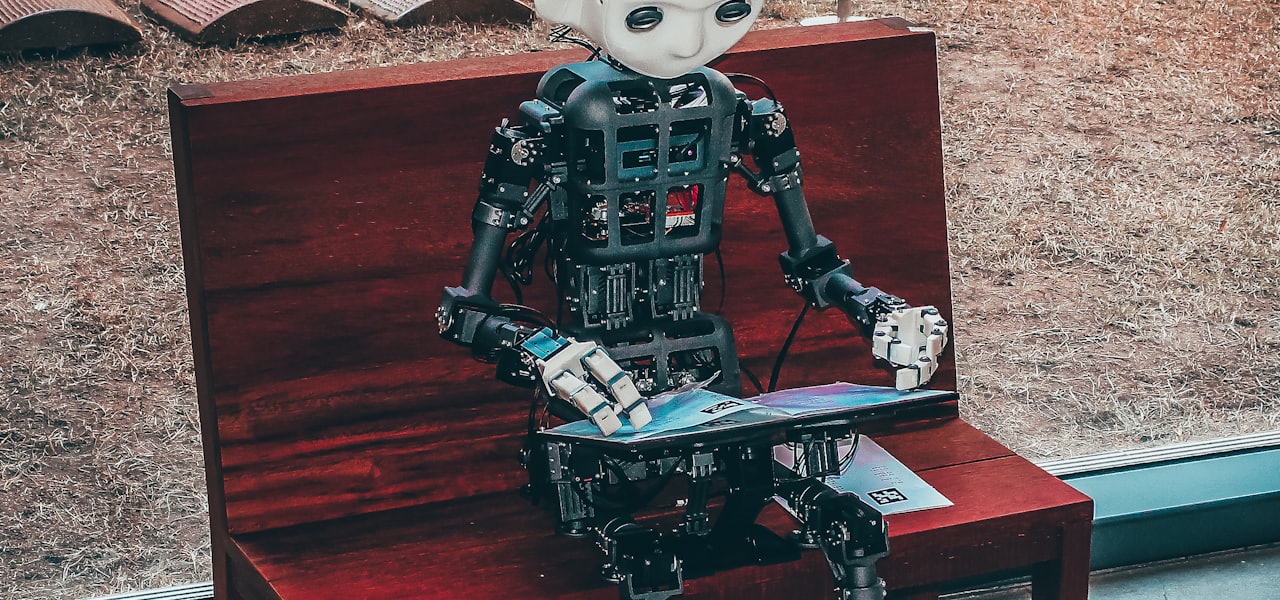
Artificial consciousness, also known as machine consciousness, synthetic consciousness, or digital consciousness, is consciousness hypothesized to be possible for artificial intelligence. It is also the corresponding field of study, which draws insights from philosophy of mind, philosophy of artificial intelligence, cognitive science and neuroscience. The term "sentience" can be used when specifically designating ethical considerations stemming from a form of phenomenal consciousness (P-consciousness, or the ability to feel qualia). Since sentience involves the ability to experience ethically positive or negative (i.e., valenced) mental states, it may justify welfare concerns and legal protection, as with non-human animals. Some scholars believe that consciousness is generated by the interoperation of various parts of the brain; these mechanisms are labeled the neural correlates of consciousness (NCC). Some further believe that constructing a system (e.g., a computer system) that can emulate this NCC interoperation would result in a system that is conscious. Some scholars reject the possibility of non-biological conscious beings. == Philosophical views == As there are many hypothesized types of consciousness, there are many potential implementations of artificial consciousness. In the philosophical literature, perhaps the most common taxonomy of consciousness is into "access" and "phenomenal" variants. Access consciousness concerns those aspects of experience that can be apprehended, while phenomenal consciousness concerns those aspects of experience that seemingly cannot be apprehended, instead being characterized qualitatively in terms of "raw feels", "what it is like" or qualia. === Plausibility debate === Type-identity theorists and other skeptics hold the view that consciousness can be realized only in particular physical systems because consciousness has properties that necessarily depend on physical constitution. In his 2001 article "Artificial Consciousness: Utopia or Real Possibility," Giorgio Buttazzo says that a common objection to artificial consciousness is that, "Working in a fully automated mode, they [the computers] cannot exhibit creativity, unreprogrammation (which means can 'no longer be reprogrammed', from rethinking), emotions, or free will. A computer, like a washing machine, is a slave operated by its components." For other theorists (e.g., functionalists), who define mental states in terms of causal roles, any system that can instantiate the same pattern of causal roles, regardless of physical constitution, will instantiate the same mental states, including consciousness. ==== Thought experiments ==== David Chalmers proposed two thought experiments intending to demonstrate that "functionally isomorphic" systems (those with the same "fine-grained functional organization", i.e., the same information processing) will have qualitatively identical conscious experiences, regardless of whether they are based on biological neurons or digital hardware. The "fading qualia" is a reductio ad absurdum thought experiment. It involves replacing, one by one, the neurons of a brain with a functionally identical component, for example based on a silicon chip. Chalmers makes the hypothesis, knowing it in advance to be absurd, that "the qualia fade or disappear" when neurons are replaced one-by-one with identical silicon equivalents. Since the original neurons and their silicon counterparts are functionally identical, the brain's information processing should remain unchanged, and the subject's behaviour and introspective reports would stay exactly the same. Chalmers argues that this leads to an absurd conclusion: the subject would continue to report normal conscious experiences even as their actual qualia fade away. He concludes that the subject's qualia actually don't fade, and that the resulting robotic brain, once every neuron is replaced, would remain just as sentient as the original biological brain. Similarly, the "dancing qualia" thought experiment is another reductio ad absurdum argument. It supposes that two functionally isomorphic systems could have different perceptions (for instance, seeing the same object in different colors, like red and blue). It involves a switch that alternates between a chunk of brain that causes the perception of red, and a functionally isomorphic silicon chip, that causes the perception of blue. Since both perform the same function within the brain, the subject would not notice any change during the switch. Chalmers argues that this would be highly implausible if the qualia were truly switching between red and blue, hence the contradiction. Therefore, he concludes that the equivalent digital system would not only experience qualia, but it would perceive the same qualia as the biological system (e.g., seeing the same color). Greg Egan's short story Learning To Be Me (mentioned in §In fiction), illustrates how undetectable duplication of the brain and its functionality could be from a first-person perspective. Critics object that Chalmers' proposal begs the question in assuming that all mental properties and external connections are already sufficiently captured by abstract causal organization. Van Heuveln et al. argue that the dancing qualia argument contains an equivocation fallacy, conflating a "change in experience" between two systems with an "experience of change" within a single system. Mogensen argues that the fading qualia argument can be resisted by appealing to vagueness at the boundaries of consciousness and the holistic structure of conscious neural activity, which suggests consciousness may require specific biological substrates rather than being substrate-independent. Anil Seth argues that the complexity of brain neurons intrinsically matters in addition to their function and that it is not possible to replace any part of the brain with a perfect silicon equivalent. He points out that some of biological neurons exhibit activity aimed at cleaning up metabolic waste products, and writes that a perfect silicon replacement would require a silicon-based metabolism, but silicon is not suitable for creating such artificial metabolism. ==== In large language models ==== In 2022, Google engineer Blake Lemoine made a viral claim that Google's LaMDA chatbot was sentient. Lemoine supplied as evidence the chatbot's humanlike answers to many of his questions; however, the chatbot's behavior was judged by the scientific community as likely a consequence of mimicry, rather than machine sentience. Lemoine's claim was widely derided for being ridiculous. Moreover, attributing consciousness based solely on the basis of LLM outputs or the immersive experience created by an algorithm is considered a fallacy. However, while philosopher Nick Bostrom states that LaMDA is unlikely to be conscious, he additionally poses the question of "what grounds would a person have for being sure about it?" One would have to have access to unpublished information about LaMDA's architecture, and also would have to understand how consciousness works, and then figure out how to map the philosophy onto the machine: "(In the absence of these steps), it seems like one should be maybe a little bit uncertain. [...] there could well be other systems now, or in the relatively near future, that would start to satisfy the criteria." David Chalmers argued in 2023 that LLMs today display impressive conversational and general intelligence abilities, but are likely not conscious yet, as they lack some features that may be necessary, such as recurrent processing, a global workspace, and unified agency. Nonetheless, he considers that non-biological systems can be conscious, and suggested that future, extended models (LLM+s) incorporating these elements might eventually meet the criteria for consciousness, raising both profound scientific questions and significant ethical challenges. However, the view that consciousness can exist without biological phenomena is controversial and some reject it. Kristina Šekrst cautions that anthropomorphic terms such as "hallucination" can obscure important ontological differences between artificial and human cognition. While LLMs may produce human-like outputs, she argues that it does not justify ascribing mental states or consciousness to them. Instead, she advocates for an epistemological framework (such as reliabilism) that recognizes the distinct nature of AI knowledge production. She suggests that apparent understanding in LLMs may be a sophisticated form of AI hallucination. She also questions what would happen if an LLM were trained without any mention of consciousness. === Testing === Sentience is an inherently first-person phenomenon. Because of that, and due to the lack of an empirical definition of sentience, directly measuring it may be impossible. Although systems may display numerous behaviors correlated with sentience, determining whether a system is sentient is known as the hard pr
Augment (app)
Augment is an augmented reality SaaS platform that allows users to visualize their products in 3D in real environment and in real-time through tablets or smartphones. The software can be used for retail, e-commerce, architecture, and other purposes. Augment created a mobile app of the same name, used to visualize 3D models in augmented reality and a web application called Augment Manager for 3D content management. The company is based in Paris, France, and was founded in October 2011 by Jean-François Chianetta, Cyril Champier, and Mickaël Jordan. In March 2016, Augment announced €3 million in its series-A round from Salesforce Ventures, which bringing the total funding since launch to $4.7 million. Augment lets businesses and 3D professionals visualize projects in their actual size and environment, on iPhone, iPad, and Android, using the power of augmented reality. Users can print the Augment tracker or create their own tracker to place the 3D models in space and at scale in real time. Common uses of the technology include product presentations, interactive print campaigns and e-Commerce product visualization. Augment has just released its augmented reality SDK solutions for retail and augmented commerce. The SDK solutions, available for both native mobile app and web integrations, allow companies to embed augmented reality product visualization in their existing eCommerce platforms. == Technology == Augment uses the following 3D technologies: Vuforia Augmented Reality SDK OpenGL == Customer cases == Companies such as Coca-Cola, Siemens, Nokia, Nestle, and Boeing are using Augment's solutions. == History == Augment was first created by Jean-François Chianetta in October 2011. Chianetta later teamed up with Cyril Champier and Mickaël Jordan for further development. The co-founding team was among the 12 startups of Season 3 of French accelerator Le Camping. The team raised one million euros (US$1,300,000) in April 2013 and moved its office to Paris. In March 2016, Augment raised US$3M Series A funding from Salesforce and other investors. In 2013, Augment's first service, Boost Business Catalog, was made available to help businesses catalogue and display their product models. Customers can rotate the images in 3D and view augmented content before deciding what to buy. == Awards == "Best Innovation" at Ecommerce Mag Trophy 2013
Tuber (app)
Tuber (Chinese: Tuber浏览器) was a web browser mobile app developed by Shanghai Fengxuan Information Technology that allowed users within mainland China to view filtered versions of certain websites normally blocked by the Great Firewall. Filtered versions of websites such as Google, Facebook, Instagram, YouTube, Twitter, Netflix, IMDb, and Wikipedia could be viewed. The app was backed by cybersecurity company Qihoo 360 which served as the parent company. The app required phone number registration. Sensitive keywords were blocked by the app. On October 9, 2020, Global Times editor Rita Bai Yunyi tweeted that the move represented "a great step for China's opening up". The app was removed from China domestic app stores and operations ceased as of October 10, 2020. On October 12, when questioned by a Bloomberg News reporter on the topic, Foreign Ministry spokesperson Zhao Lijian replied, "This is not a diplomatic issue, and I do not have the relevant information you mentioned. China has always managed the Internet in accordance with the law. I suggest you ask the competent department for the specific situation."
VOCEDplus
VOCEDplus is a free international research database about tertiary education, maintained and developed by staff at the c (NCVER) in Adelaide, South Australia. The focus of the database content is the relation of post-compulsory education and training to workforce needs, skills development, and social inclusion. == Structure == The content of the VOCEDplus database encompasses vocational education and training (VET), higher education, lifelong learning, informal learning, VET in schools, adult and community education, apprenticeships/traineeships, international education, providers of education and training, and workforce development. It is international in scope and contains over 84,000 English language records, many with links to full text documents. VOCEDplus contains extensive Australian materials and includes a wide range of international information, covering outcomes of tertiary education in the shape of published research, practice, policy, and statistics. Entries are included for the following types of publications: reports; annual reports; papers; discussion papers; occasional papers; working papers; books; book chapters; conference papers; conference proceedings; journals; journal articles; policy documents; published statistics; theses; podcasts; and teaching and training materials. Each database entry contains standard bibliographic information and an abstract. Many entries include full text access via the publisher's website or a digitised copy. == History == === 1989-1997 === In the early years VOCEDplus was known as VOCED. The original database was produced by a network of clearinghouses across Australia with the aim of sharing activities in the technical and further education (TAFE) sector. VOCED was produced in hardcopy and an electronic version was distributed on diskette. === 1997-2001 === 1997 - the first web version of VOCED was made available from the National Centre for Vocational Education Research (NCVER) organisational website 1998 - a major project to upgrade the database and expand its international coverage commenced 2001 - creation of VOCED's own website 2001 - VOCED endorsed as the UNESCO international database for technical and vocational education and training (TVET) research information === 2001-2009 === Many changes to the database and website occurred during this period with a focus on continuous improvement to meet the needs of users and utilise emerging technologies. 2006 - materials produced for two adult literacy and learning programs funded by the Australian Department of Education, Employment and Workplace Relations (DEEWR) - the Workplace English Language and Learning (WELL) Programme and the Adult Literacy National Project (ALNP) included in VOCED 2007 - the Australian clearinghouse network transferred most of the hardcopy collections to NCVER, to form a centralised repository of resources 2009 - materials produced by Reframing the Future (RTF) a vocational education and training workforce development initiative of the Australian, State and Territory Governments included in VOCED === 2009-2014 === A major rebuild of the database and website was undertaken during this period to take advantage of the potential of new technologies to provide improved services and incorporate Web 2.0 technologies (RSS feeds, and share and bookmark tools). 2009 - scope expanded to more fully encompass the higher education sector 2011 - launch of VOCEDplus with the name change representing the enhanced features and extended focus 2012 - a major retrospective digitisation project commenced and by the end of the 2012-2013 financial year a total of 9,328 publications (593,534 pages/microfiche frames) had been digitised, ensuring these publications are available electronically for free === 2014-2019 === A number of significant curated content products were released during this period. 2015 - release of a refreshed look to adopt the new NCVER branding plus a number of search enhancements (Guided search, Expert search, and Glossary search) were added 2015 - first in the series of 'Focus on...' pages released 2016 - launch of the 'Pod Network', a convenient and efficient platform that allows instant access to research and a multitude of resources on a range of subjects 2017 - completion of the 'Pod Network', consisting of 20 Pods (on broad subjects including Apprenticeships and traineeships, Foundation skills, Teaching and learning, Career development, and Students) and 74 Podlets (on narrow topics including Online learning, Social media, VET in schools, STEM skills, and Adult literacy) 2018 - launch of the 'Timeline of Australian VET Policy Initiatives' and the 'VET Knowledge Bank' which contains a suite of products capturing Australia's diverse, complex and ever-changing VET system 2019 - after an internal review, a refreshed, streamlined version of the 'Pod Network' was released, consisting of 13 Pods and 20 Podlets 2019 - launch of the 'VET Practitioner Resource' which contains a range of information to support VET practitioners in their work and is organised into three sections: (1) Teaching, training and assessment: standards, guidance, research and good practice resources to inform daily work; (2) Practitioners as researchers: information for undertaking practitioner-led research; and (3) The VET workforce: information about VET teachers and trainers, and the professional development needs of the VET workforce 2019 - VOCEDplus celebrated 30 years of providing information to the tertiary education sector and the homepage was refreshed to make it more modern and easier to use === 2020- === VOCEDplus continued to be accessible throughout the COVID-19 pandemic. 2020-2021 - the VET Knowledge Bank added a dedicated page, 'COVID-19 announcements', that showcases the measures introduced by the Australian, state and territory governments to mitigate the impact of the pandemic and promote economic recovery 2020-2024 - published research about the effects of the pandemic on education and training, providers, students, labour markets, employment and employees was collected and made permanently available in the database 2024 - VOCEDplus celebrated 35 years of providing information to the tertiary education sector. The homepage was refreshed and a number of enhancements and new features were implemented including a new My Profile feature, improvements to My Selection, accessible search history and saved searches, enhanced search functionality, and improved navigation.
Unfold (app)
Unfold is a mobile application that allows users to create social media content using a variety of templates and other tools. It was founded in 2018 by Alfonso Cobo and Andy McCune. It enables users to add photos, video, and text with a variety of tools. In 2019, Unfold was acquired by Squarespace. == History == In January 2017, Alfonso Cobo was studying at Parsons School of Design when he realized there was no software or app that could create a portfolio of his work on an iPad. Cobo created an app called Portfolio, a basic version of a portfolio layout app, and the first one to exist for iPad. He launched it in 2017. After launching the first version of Portfolio, Cobo realized the more popular market and use case was on mobile. Around that time, Instagram was launching Stories. As a result, Cobo pivoted the app away from portfolios and instead focused on an app to showcase one's stories. Cobo later contacted Andy McCune, founder of social media account Earth, to collaborate with Unfold. Unfold also partnered with various companies to create custom templates. These include Equinox, Tommy Hilfiger, NARS, Billboard Music Awards, and Product Red. Unfold also launched a collection of Product Red templates to help eliminate HIV/AIDS in several African countries. In 2019, Squarespace acquired Unfold. The Unfold app has been downloaded over 60 million times and has been used to create over 1 billion Instagram stories. == Features == With Unfold, users can utilize hundreds of templates to make social content for social media platforms such as Instagram, Snapchat, and Facebook. The free app offers users basic templates and standard fonts, filters, and stickers, and there are also premium templates available for a monthly subscription. With Unfold+ and Unfold Pro (previously Unfold for Brands), users can access premium templates and tools, as well as upload custom brand assets and fonts. In 2020, Unfold launched Bio Sites, which allows users to link to multiple sites and platforms.
Native cloud application
A native cloud application (NCA) is a type of computer software that natively utilizes services and infrastructure from cloud computing providers such as Amazon EC2, Force.com, or Microsoft Azure. NCAs exhibit a combined usage of the three fundamental technologies: Computational grid - loosely, e.g. MapReduce Data grids (e.g. distributed in-memory data caches) Auto-scaling on any managed infrastructure
Stanza Living
Stanza Living is the common brand name for Dtwelve Spaces Private Limited. It provides fully-managed shared living accommodations to students and young professionals. Founded by Anindya Dutta and Sandeep Dalmia, the company is present across 23 cities including Delhi, NCR, Bangalore, Visakhapatnam, Hyderabad, Chennai, Coimbatore, Indore, Pune, Baroda, Vijayawada, and Dehradun, Kota in India, with a capacity of 70,000 beds. Stanza Living is a technology-enabled housing concept which provides fully-furnished residences with amenities like meals, internet, laundry services, housekeeping, security and community engagement programmes. The company has an asset-light business model under which it engages in long-term lease agreements with property owners/developers, who convert their assets into shared living residences as per company guidelines. These assets are subsequently operated by Stanza Living. == Industry background == A report by Cushman & Wakefield (C&W) titled 'Exploring the Student Housing Universe in India City Insights', estimates that there were over 9.08 million migrant student enrolments in India's higher educational institutions (HEIs) for the year 2018-19 who need quality accommodation facilities. According to the report, Delhi-NCR, Mumbai, and Pune are the three biggest markets for student housing in the country, and these cities require an additional 4.75 lakh beds from organized co-living operators to meet the current demand. == History == Stanza Living provides tech-enabled, fully managed community living facilities for students and working professionals. The company was launched as a student housing business in Delhi NCR with a capacity of 100 beds, and grew to 14 cities by 2019. By early 2020, the company began catering to working professionals as well. The company has a combined inventory of 70,000 beds under management for both students and working professionals. Stanza Living is currently valued at $300 million. It has raised a capital of about $70 million from leading global investors like Falcon Edge Capital, Sequoia Capital, Matrix Partners and Accel Partners. November 2017 – Seed funding, September 2018 – Series A, March 2019 – Debt financing, July 2019 – Series C round, December 2019 - Debt financing. The company has invested in building technology products for business efficiency and consumer experience, like the Stanza Resident App and Stanza Real Estate App. Stanza Living has close to 1,500 employees across India. It is recognized among Top Real Estate Tech Startups of 2020 across the globe by research and analysis company Tracxn. The company has been shortlisted among Top 25 Start-ups of India in 2019 by LinkedIn == Founders == Stanza Living was co-founded by Anindya Dutta and Sandeep Dalmia. Sandeep Dalmia is an alumnus of Delhi College of Engineering and IIM Ahmedabad. Prior to Stanza, he was a Principal at Boston Consulting Group, working across India, US and South East Asia markets. Anindya Dutta was previously a Real Estate investor with Oaktree Capital and prior to that, he worked at Goldman Sachs in London. He is an alumnus of IIT Kharagpur and IIM Ahmedabad.