Physical information security is the intersection or common ground between physical security and information security. It primarily concerns the protection of tangible information-related assets such as computer systems and storage media against physical, real-world threats such as unauthorized physical access, theft, fire and flood. It typically involves physical controls such as protective barriers and locks, uninterruptible power supplies, and shredders. Information security controls in the physical domain complement those in the logical domain (such as encryption), and procedural or administrative controls (such as information security awareness and compliance with policies and laws). == Background == Asset are inherently valuable and yet vulnerable to a wide variety of threats, both malicious (e.g. theft, arson) and accidental/natural (e.g. lost property, bush fire). If threats materialize and exploit those vulnerabilities causing incidents, there are likely to be adverse impacts on the organizations or individuals who legitimately own and utilize the assets, varying from trivial to devastating in effect. Security controls are intended to reduce the probability or frequency of occurrence and/or the severity of the impacts arising from incidents, thus protecting the value of the assets. Physical security involves the use of controls such as smoke detectors, fire alarms and extinguishers, along with related laws, regulations, policies and procedures concerning their use. Barriers such as fences, walls and doors are obvious physical security controls, designed to deter or prevent unauthorized physical access to a controlled area, such as a home or office. The moats and battlements of Mediaeval castles are classic examples of physical access controls, as are bank vaults and safes. Information security controls protect the value of information assets, particularly the information itself (i.e. the intangible information content, data, intellectual property, knowledge etc.) but also computer and telecommunications equipment, storage media (including papers and digital media), cables and other tangible information-related assets (such as computer power supplies). The corporate mantra "Our people are our greatest assets" is literally true in the sense that so-called knowledge workers qualify as extremely valuable, perhaps irreplaceable information assets. Health and safety measures and even medical practice could therefore also be classed as physical information security controls since they protect humans against injuries, diseases and death. This perspective exemplifies the ubiquity and value of information. Modern human society is heavily reliant on information, and information has importance and value at a deeper, more fundamental level. In principle, the subcellular biochemical mechanisms that maintain the accuracy of DNA replication could even be classed as vital information security controls, given that genes are 'the information of life'. Malicious actors who may benefit from physical access to information assets include computer crackers, corporate spies, and fraudsters. The value of information assets is self-evident in the case of, say, stolen laptops or servers that can be sold-on for cash, but the information content is often far more valuable, for example encryption keys or passwords (used to gain access to further systems and information), trade secrets and other intellectual property (inherently valuable or valuable because of the commercial advantages they confer), and credit card numbers (used to commit identity fraud and further theft). Furthermore, the loss, theft or damage of computer systems, plus power interruptions, mechanical/electronic failures and other physical incidents prevent them being used, typically causing disruption and consequential costs or losses. Unauthorized disclosure of confidential information, and even the coercive threat of such disclosure, can be damaging as we saw in the Sony Pictures Entertainment hack at the end of 2014 and in numerous privacy breach incidents. Even in the absence of evidence that disclosed personal information has actually been exploited, the very fact that it is no longer secured and under the control of its rightful owners is itself a potentially harmful privacy impact. Substantial fines, adverse publicity/reputational damage and other noncompliance penalties and impacts that flow from serious privacy breaches are best avoided, regardless of cause! == Examples of physical attacks to obtain information == There are several ways to obtain information through physical attacks or exploitations. A few examples are described below. === Dumpster diving === Dumpster diving is the practice of searching through trash in the hope of obtaining something valuable such as information carelessly discarded on paper, computer disks or other hardware. === Overt access === Sometimes attackers will simply go into a building and take the information they need. Frequently when using this strategy, an attacker will masquerade as someone who belongs in the situation. They may pose as a copy room employee, remove a document from someone's desk, copy the document, replace the original, and leave with the copied document. Individuals pretending to building maintenance may gain access to otherwise restricted spaces. They might walk right out of the building with a trash bag containing sensitive documents, carrying portable devices or storage media that were left out on desks, or perhaps just having memorized a password on a sticky note stuck to someone's computer screen or called out to a colleague across an open office. == Examples of Physical Information Security Controls == Shredding paper documents prior to their disposal can prevent unintended information leakage. Digital data can be encrypted or securely wiped. Offices may require visitors to present valid identification cards or valid access keys. Office workers may be required to obey "clear desk" policies, protecting documents and other storage media (including portable IT devices) by tidying them away out of sight (for example in locked drawers, filing cabinets, safes or a Bank vault). Workers may be required to memorize their passwords or use a password manager instead of writing passwords on paper. Computers are vulnerable to outages caused by power cuts, accidental disconnection, flat batteries, brown-outs, surges, spikes, electrical interference and electronic failures. Physical information security controls to address the associated risks include: fuses, no-break battery-backed power supplies, electrical generators, redundant power sources and cabling, "Do not remove" warning signs on plugs, surge protectors, power quality monitoring, spare batteries, professional design and installation of power circuits plus regular inspections/tests and preventive maintenance.
List of Ruby software and tools
This is a list of software and programming tools for the Ruby programming language, which includes libraries, web frameworks, implementations, tools, and related projects. == Web tools == Capistrano (software) – remote server automation tool Mongrel – Ruby web server Rack – interface between web servers and web applications Ruby on Rails – full-stack web application framework Sinatra – lightweight Ruby web application framework Spree Commerce – e-commerce platform WEBrick – Ruby HTTP server toolkit == Libraries == BioRuby – bioinformatics and computational biology library for Ruby Bogus – Ruby library for creating reliable test doubles with contract verification ERuby – embedded Ruby templating EventMachine – event-driven I/O library Factory Bot – test fixtures library Fat comma – Ruby library for JSON-like hash syntax Geocoder – Ruby library for geocoding and reverse geocoding addresses Haml – HTML templating engine Markaby – HTML generation via Ruby Nokogiri – XML/HTML parsing library RSpec – behavior-driven testing framework for Ruby RubyGems – package manager for Ruby libraries and applications Sass – CSS preprocessor Sidekiq – background job framework for Ruby, used to handle asynchronous tasks. Uconv – Unicode text conversion library Watir – web application testing framework == Ruby implementations == HotRuby – Ruby interpreter implemented in JavaScript, enabling Ruby code to run in web browsers. IronRuby – Ruby for .NET platform JRuby – Ruby on the Java Virtual Machine MacRuby – Ruby implementation for macOS Mod ruby – Apache module that embeds the Ruby interpreter to improve performance of Ruby web applications Mruby – lightweight Ruby interpreter Rubinius – alternative Ruby implementation, based loosely on the Smalltalk-80 Blue Book design. Ruby MRI – the standard Ruby interpreter YARV – "Yet Another Ruby VM," the bytecode interpreter used in modern Ruby implementations == Tools == Homebrew – package manager for macOS and Linux written in Ruby Pry – interactive Ruby shell Rake – build and task management Ruby Version Manager – environment manager RubyCocoa – bridge between Ruby and Cocoa RubyForge – project hosting site RubyMotion – for iOS/macOS development RubySpec – language specification tests == Integrated Development Environments == Aptana Studio — integrated RadRails plugin for Ruby on Rails development Eclipse DLTK Ruby Plugin — Ruby development plugin for Eclipse Eric — open-source Python-based IDE with Ruby support Komodo IDE — commercial cross-platform IDE with Ruby support RubyMine — commercial IDE for Ruby and Rails by JetBrains SlickEdit — commercial cross-platform IDE with Ruby support == List of websites using Ruby on Rails == Airbnb Basecamp Diaspora – decentralized social network application built with Ruby on Rails Discourse – open-source discussion platform built with Ruby on Rails Fiverr GitHub Hulu Shopify SoundCloud Twitch Zendesk
Hierarchical Risk Parity
Hierarchical Risk Parity (HRP) is an advanced investment portfolio optimization framework developed in 2016 by Marcos López de Prado at Guggenheim Partners and Cornell University. HRP is a probabilistic graph-based alternative to the prevailing mean-variance optimization (MVO) framework developed by Harry Markowitz in 1952, and for which he received the Nobel Prize in economic sciences. HRP algorithms apply discrete mathematics and machine learning techniques to create diversified and robust investment portfolios that outperform MVO methods out-of-sample. HRP aims to address the limitations of traditional portfolio construction methods, particularly when dealing with highly correlated assets. Following its publication, HRP has been implemented in numerous open-source libraries, and received multiple extensions. == Key features == HRP portfolios have been proposed as a robust alternative to traditional quadratic optimization methods, including the Critical Line Algorithm (CLA) of Markowitz. HRP addresses three central issues commonly associated with quadratic optimizers: numerical instability, excessive concentration in a small number of assets, and poor out-of-sample performance. HRP leverages techniques from graph theory and machine learning to construct diversified portfolios using only the information embedded in the covariance matrix. Unlike quadratic programming methods, HRP does not require the covariance matrix to be invertible. Consequently, HRP remains applicable even in cases where the covariance matrix is ill-conditioned or singular—conditions under which standard optimizers fail. Monte Carlo simulations indicate that HRP achieves lower out-of-sample variance than CLA, despite the fact that minimizing variance is the explicit optimization objective of CLA. Furthermore, HRP portfolios exhibit lower realized risk compared to those generated by traditional risk parity methodologies. Empirical backtests have demonstrated that HRP would have historically outperformed conventional portfolio construction techniques. Algorithms within the HRP framework are characterized by the following features: Machine Learning Approach: HRP employs hierarchical clustering, a machine learning technique, to group similar assets based on their correlations. This allows the algorithm to identify the underlying hierarchical structure of the portfolio, and avoid that errors spread through the entire network. Risk-Based Allocation: The algorithm allocates capital based on risk, ensuring that assets only compete with similar assets for representation in the portfolio. This approach leads to better diversification across different risk sources, while avoiding the instability associated with noisy returns estimates. Covariance Matrix Handling: Unlike traditional methods like Mean-Variance Optimization, HRP does not require inverting the covariance matrix. This makes it more stable and applicable to portfolios with a large number of assets, particularly when the covariance matrix's condition number is high. == The problem: Markowitz's Curse == Portfolio construction is perhaps the most recurrent financial problem. On a daily basis, investment managers must build portfolios that incorporate their views and forecasts on risks and returns. Despite the theoretical elegance of Markowitz's mean-variance framework, its practical implementation is hindered by several limitations that undermine the reliability of solutions derived from the Critical Line Algorithm (CLA). A principal concern is the high sensitivity of optimal portfolios to small perturbations in expected returns: even minor forecasting errors can result in significantly different allocations (Michaud, 1998). Given the inherent difficulty of producing accurate return forecasts, numerous researchers have advocated for approaches that forgo expected returns entirely and instead rely solely on the covariance structure of asset returns. This has given rise to risk-based allocation methods, among which risk parity is a widely cited example (Jurczenko, 2015). While eliminating return forecasts mitigates some instability, it does not eliminate it. Quadratic programming techniques employed in portfolio optimization require the inversion of a positive-definite covariance matrix, meaning all eigenvalues must be strictly positive. When the matrix is numerically ill-conditioned—that is, when the ratio of its largest to smallest eigenvalue (its condition number) is large—matrix inversion becomes unreliable and prone to significant numerical errors (Bailey and López de Prado, 2012). The condition number of a covariance, correlation, or any symmetric (and thus diagonalizable) matrix is defined as the absolute value of the ratio between its largest and smallest eigenvalues in modulus. The figure on the right presents the sorted eigenvalues of several correlation matrices; the condition number is represented by the ratio of the first to last eigenvalues in each sequence. A diagonal correlation matrix, which is equal to its own inverse, exhibits the minimum possible condition number. As the number of correlated (or multicollinear) assets in a portfolio increases, the condition number rises. At high levels, this leads to severe numerical instability, whereby slight modifications in any matrix entry may result in drastically different inverses. This phenomenon, often referred to as Markowitz’s curse, encapsulates the paradox wherein increased correlation among assets heightens the theoretical need for diversification, yet simultaneously increases the likelihood of unstable optimization outcomes. Consequently, the potential benefits of diversification are frequently overshadowed by estimation errors. These problems are exacerbated as the dimensionality of the covariance matrix increases. The estimation of each covariance term consumes degrees of freedom, and in general, a minimum of 1 2 N ( N + 1 ) {\displaystyle {\frac {1}{2}}N(N+1)} independent and identically distributed (IID) observations is required to estimate a non-singular covariance matrix of dimension N {\displaystyle N} . For example, constructing an invertible covariance matrix of dimension 50 necessitates at least five years of daily IID observations. However, empirical evidence suggests that the correlation structure of financial assets is highly unstable over such extended periods. These difficulties are highlighted by the observation that even naïve allocation strategies—such as equally weighted portfolios—have frequently outperformed both mean-variance and risk-based optimizations in out-of-sample tests (De Miguel et al., 2009). == The solution: Hierarchical Risk Parity == The HRP algorithm addresses Markowitz's curse in three steps: Hierarchical Clustering: Assets are grouped into clusters based on their correlations, forming a hierarchical tree structure. Quasi-Diagonalization: The correlation matrix is reordered based on the clustering results, revealing a block diagonal structure. Recursive Bisection: Weights are assigned to assets through a top-down approach, splitting the portfolio into smaller sub-portfolios and allocating capital based on inverse variance. === Step 1: Hierarchical clustering === Given a T × N {\displaystyle T\times N} matrix of asset returns X {\displaystyle X} , where each column represents a time series of returns for one of N {\displaystyle N} assets over T {\displaystyle T} time periods, a hierarchical clustering process can be used to construct a tree-based representation of asset relationships. First, we compute the N × N {\displaystyle N\times N} correlation matrix ρ = ρ i , j i , j = 1 . . . N {\displaystyle \rho ={\rho _{i,j}}\;{i,j=1\;...\;N}} , where ρ i , j = c o r r ( X i , X j ) {\displaystyle \rho _{i,j}=\mathrm {corr} (X_{i},X_{j})} . From this, a pairwise distance matrix D = d i , j {\displaystyle D={d_{i,j}}} is defined using the transformation: d i , j = 1 2 ( 1 − ρ i , j ) {\displaystyle d_{i,j}={\sqrt {{\frac {1}{2}}(1-\rho _{i,j})}}} This distance function defines a proper metric space, satisfying non-negativity, identity of indiscernibles, symmetry, and the triangle inequality. Next, a secondary distance matrix D ~ = d ~ i , j {\displaystyle {\tilde {D}}={{\tilde {d}}_{i,j}}} is computed, where each entry measures the Euclidean distance between the distance profiles of two assets: d ~ i , j = ∑ n = 1 N ( d n , i − d n , j ) 2 {\displaystyle {\tilde {d}}_{i,j}={\sqrt {\sum _{n=1}^{N}(d_{n,i}-d_{n,j})^{2}}}} While d i , j {\displaystyle d_{i,j}} reflects correlation-based proximity between two assets, d ~ i , j {\displaystyle {\tilde {d}}_{i,j}} quantifies dissimilarity across the entire system, as it depends on all pairwise distances. Hierarchical clustering proceeds by identifying the pair ( i , j ) {\displaystyle (i,j)} with the smallest value of d ~ i , j {\displaystyle {\tilde {d}}_{i,j}} (for i ≠ j {\displaystyle i\neq j} ), and forming a new cluster u [ 1 ] = ( i , j ) {\displaystyle u[1]=(i,j)} .
Algorithm selection
Algorithm selection (sometimes also called per-instance algorithm selection or offline algorithm selection) is a meta-algorithmic technique to choose an algorithm from a portfolio on an instance-by-instance basis. It is motivated by the observation that on many practical problems, different algorithms have different performance characteristics. That is, while one algorithm performs well in some scenarios, it performs poorly in others and vice versa for another algorithm. If we can identify when to use which algorithm, we can optimize for each scenario and improve overall performance. This is what algorithm selection aims to do. The only prerequisite for applying algorithm selection techniques is that there exists (or that there can be constructed) a set of complementary algorithms. == Definition == Given a portfolio P {\displaystyle {\mathcal {P}}} of algorithms A ∈ P {\displaystyle {\mathcal {A}}\in {\mathcal {P}}} , a set of instances i ∈ I {\displaystyle i\in {\mathcal {I}}} and a cost metric m : P × I → R {\displaystyle m:{\mathcal {P}}\times {\mathcal {I}}\to \mathbb {R} } , the algorithm selection problem consists of finding a mapping s : I → P {\displaystyle s:{\mathcal {I}}\to {\mathcal {P}}} from instances I {\displaystyle {\mathcal {I}}} to algorithms P {\displaystyle {\mathcal {P}}} such that the cost ∑ i ∈ I m ( s ( i ) , i ) {\displaystyle \sum _{i\in {\mathcal {I}}}m(s(i),i)} across all instances is optimized. == Examples == === Boolean satisfiability problem (and other hard combinatorial problems) === A well-known application of algorithm selection is the Boolean satisfiability problem. Here, the portfolio of algorithms is a set of (complementary) SAT solvers, the instances are Boolean formulas, the cost metric is for example average runtime or number of unsolved instances. So, the goal is to select a well-performing SAT solver for each individual instance. In the same way, algorithm selection can be applied to many other N P {\displaystyle {\mathcal {NP}}} -hard problems (such as mixed integer programming, CSP, AI planning, TSP, MAXSAT, QBF and answer set programming). Competition-winning systems in SAT are SATzilla, 3S and CSHC === Machine learning === In machine learning, algorithm selection is better known as meta-learning. The portfolio of algorithms consists of machine learning algorithms (e.g., Random Forest, SVM, DNN), the instances are data sets and the cost metric is for example the error rate. So, the goal is to predict which machine learning algorithm will have a small error on each data set. == Instance features == The algorithm selection problem is mainly solved with machine learning techniques. By representing the problem instances by numerical features f {\displaystyle f} , algorithm selection can be seen as a multi-class classification problem by learning a mapping f i ↦ A {\displaystyle f_{i}\mapsto {\mathcal {A}}} for a given instance i {\displaystyle i} . Instance features are numerical representations of instances. For example, we can count the number of variables, clauses, average clause length for Boolean formulas, or number of samples, features, class balance for ML data sets to get an impression about their characteristics. === Static vs. probing features === We distinguish between two kinds of features: Static features are in most cases some counts and statistics (e.g., clauses-to-variables ratio in SAT). These features ranges from very cheap features (e.g. number of variables) to very complex features (e.g., statistics about variable-clause graphs). Probing features (sometimes also called landmarking features) are computed by running some analysis of algorithm behavior on an instance (e.g., accuracy of a cheap decision tree algorithm on an ML data set, or running for a short time a stochastic local search solver on a Boolean formula). These feature often cost more than simple static features. === Feature costs === Depending on the used performance metric m {\displaystyle m} , feature computation can be associated with costs. For example, if we use running time as performance metric, we include the time to compute our instance features into the performance of an algorithm selection system. SAT solving is a concrete example, where such feature costs cannot be neglected, since instance features for CNF formulas can be either very cheap (e.g., to get the number of variables can be done in constant time for CNFs in the DIMACs format) or very expensive (e.g., graph features which can cost tens or hundreds of seconds). It is important to take the overhead of feature computation into account in practice in such scenarios; otherwise a misleading impression of the performance of the algorithm selection approach is created. For example, if the decision which algorithm to choose can be made with perfect accuracy, but the features are the running time of the portfolio algorithms, there is no benefit to the portfolio approach. This would not be obvious if feature costs were omitted. == Approaches == === Regression approach === One of the first successful algorithm selection approaches predicted the performance of each algorithm m ^ A : I → R {\displaystyle {\hat {m}}_{\mathcal {A}}:{\mathcal {I}}\to \mathbb {R} } and selected the algorithm with the best predicted performance a r g min A ∈ P m ^ A ( i ) {\displaystyle arg\min _{{\mathcal {A}}\in {\mathcal {P}}}{\hat {m}}_{\mathcal {A}}(i)} for an instance i {\displaystyle i} . === Clustering approach === A common assumption is that the given set of instances I {\displaystyle {\mathcal {I}}} can be clustered into homogeneous subsets and for each of these subsets, there is one well-performing algorithm for all instances in there. So, the training consists of identifying the homogeneous clusters via an unsupervised clustering approach and associating an algorithm with each cluster. A new instance is assigned to a cluster and the associated algorithm selected. A more modern approach is cost-sensitive hierarchical clustering using supervised learning to identify the homogeneous instance subsets. === Pairwise cost-sensitive classification approach === A common approach for multi-class classification is to learn pairwise models between every pair of classes (here algorithms) and choose the class that was predicted most often by the pairwise models. We can weight the instances of the pairwise prediction problem by the performance difference between the two algorithms. This is motivated by the fact that we care most about getting predictions with large differences correct, but the penalty for an incorrect prediction is small if there is almost no performance difference. Therefore, each instance i {\displaystyle i} for training a classification model A 1 {\displaystyle {\mathcal {A}}_{1}} vs A 2 {\displaystyle {\mathcal {A}}_{2}} is associated with a cost | m ( A 1 , i ) − m ( A 2 , i ) | {\displaystyle |m({\mathcal {A}}_{1},i)-m({\mathcal {A}}_{2},i)|} . == Requirements == The algorithm selection problem can be effectively applied under the following assumptions: The portfolio P {\displaystyle {\mathcal {P}}} of algorithms is complementary with respect to the instance set I {\displaystyle {\mathcal {I}}} , i.e., there is no single algorithm A ∈ P {\displaystyle {\mathcal {A}}\in {\mathcal {P}}} that dominates the performance of all other algorithms over I {\displaystyle {\mathcal {I}}} (see figures to the right for examples on complementary analysis). In some application, the computation of instance features is associated with a cost. For example, if the cost metric is running time, we have also to consider the time to compute the instance features. In such cases, the cost to compute features should not be larger than the performance gain through algorithm selection. == Application domains == Algorithm selection is not limited to single domains but can be applied to any kind of algorithm if the above requirements are satisfied. Application domains include: hard combinatorial problems: SAT, Mixed Integer Programming, CSP, AI Planning, TSP, MAXSAT, QBF and Answer Set Programming combinatorial auctions in machine learning, the problem is known as meta-learning software design black-box optimization multi-agent systems numerical optimization linear algebra, differential equations evolutionary algorithms vehicle routing problem power systems For an extensive list of literature about algorithm selection, we refer to a literature overview. == Variants of algorithm selection == === Online selection === Online algorithm selection refers to switching between different algorithms during the solving process. This is useful as a hyper-heuristic. In contrast, offline algorithm selection selects an algorithm for a given instance only once and before the solving process. === Computation of schedules === An extension of algorithm selection is the per-instance algorithm scheduling problem, in which we do not select only one solver, but we select a time budget for each algorithm
Feature (machine learning)
In machine learning and pattern recognition, a feature is an individual measurable property or characteristic of a data set. Choosing informative, discriminating, and independent features is crucial to producing effective algorithms for pattern recognition, classification, and regression tasks. Features are usually numeric, but other types such as strings and graphs are used in syntactic pattern recognition, after some pre-processing step such as one-hot encoding. The concept of "features" is related to that of explanatory variables used in statistical techniques such as linear regression. == Feature types == In feature engineering, two types of features are commonly used: numerical and categorical. Numerical features are continuous values that can be measured on a scale. Examples of numerical features include age, height, weight, and income. Numerical features can be used in machine learning algorithms directly. Categorical features are discrete values that can be grouped into categories. Examples of categorical features include gender, color, and zip code. Categorical features typically need to be converted to numerical features before they can be used in machine learning algorithms. This can be done using a variety of techniques, such as one-hot encoding, label encoding, and ordinal encoding. The type of feature that is used in feature engineering depends on the specific machine learning algorithm that is being used. Some machine learning algorithms, such as decision trees, can handle both numerical and categorical features. Other machine learning algorithms, such as linear regression, can only handle numerical features. == Classification == A numeric feature can be conveniently described by a feature vector. One way to achieve binary classification is using a linear predictor function (related to the perceptron) with a feature vector as input. The method consists of calculating the scalar product between the feature vector and a vector of weights, qualifying those observations whose result exceeds a threshold. Algorithms for classification from a feature vector include nearest neighbor classification, neural networks, and statistical techniques such as Bayesian approaches. == Examples == In character recognition, features may include histograms counting the number of black pixels along horizontal and vertical directions, number of internal holes, stroke detection and many others. In speech recognition, features for recognizing phonemes can include noise ratios, length of sounds, relative power, filter matches, logarithmic Mel-scale spectral vectors and Mel-frequency cepstral coefficients, which represent the frequency characteristics of audio signals. In spam detection algorithms, features may include the presence or absence of certain email headers, the email structure, the language, the frequency of specific terms, the grammatical correctness of the text. In computer vision, there are a large number of possible features, such as edges and objects. == Feature vectors == In pattern recognition and machine learning, a feature vector is an n-dimensional vector of numerical features that represent some object. Many algorithms in machine learning require a numerical representation of objects, since such representations facilitate processing and statistical analysis. When representing images, the feature values might correspond to the pixels of an image, while when representing texts the features might be the frequencies of occurrence of textual terms. Feature vectors are equivalent to the vectors of explanatory variables used in statistical procedures such as linear regression. Feature vectors are often combined with weights using a dot product in order to construct a linear predictor function that is used to determine a score for making a prediction. The vector space associated with these vectors is often called the feature space. In order to reduce the dimensionality of the feature space, a number of dimensionality reduction techniques can be employed. Higher-level features can be obtained from already available features and added to the feature vector; for example, for the study of diseases the feature 'Age' is useful and is defined as Age = 'Year of death' minus 'Year of birth' . This process is referred to as feature construction. Feature construction is the application of a set of constructive operators to a set of existing features resulting in construction of new features. Examples of such constructive operators include checking for the equality conditions {=, ≠}, the arithmetic operators {+,−,×, /}, the array operators {max(S), min(S), average(S)} as well as other more sophisticated operators, for example count(S, C) that counts the number of features in the feature vector S satisfying some condition C or, for example, distances to other recognition classes generalized by some accepting device. Feature construction has long been considered a powerful tool for increasing both accuracy and understanding of structure, particularly in high-dimensional problems. Applications include studies of disease and emotion recognition from speech. == Selection and extraction == The initial set of raw features can be redundant and large enough that estimation and optimization is made difficult or ineffective. Therefore, a preliminary step in many applications of machine learning and pattern recognition consists of selecting a subset of features, or constructing a new and reduced set of features to facilitate learning, and to improve generalization and interpretability. Extracting or selecting features is a combination of art and science; developing systems to do so is known as feature engineering. It requires the experimentation of multiple possibilities and the combination of automated techniques with the intuition and knowledge of the domain expert. Automating this process is feature learning, where a machine not only uses features for learning, but learns the features itself.
Database index
A database index is a data structure that improves the speed of data retrieval operations on a database table at the cost of additional writes and storage space to maintain the index data structure. Indexes are used to quickly locate data without having to search every row in a database table every time said table is accessed. Indexes can be created using one or more columns of a database table, providing the basis for both rapid random lookups and efficient access of ordered records. An index is a copy of selected columns of data, from a table, that is designed to enable very efficient search. An index normally includes a "key" or direct link to the original row of data from which it was copied, to allow the complete row to be retrieved efficiently. Some databases extend the power of indexing by letting developers create indexes on column values that have been transformed by functions or expressions. For example, an index could be created on upper(last_name), which would only store the upper-case versions of the last_name field in the index. Another option sometimes supported is the use of partial index, where index entries are created only for those records that satisfy some conditional expression. A further aspect of flexibility is to permit indexing on user-defined functions, as well as expressions formed from an assortment of built-in functions. == Usage == === Support for fast lookup === Most database software includes indexing technology that enables sub-linear time lookup to improve performance, as linear search is inefficient for large databases. Suppose a database contains N data items and one must be retrieved based on the value of one of the fields. A simple implementation retrieves and examines each item according to the test. If there is only one matching item, this can stop when it finds that single item, but if there are multiple matches, it must test everything. This means that the number of operations in the average case is O(N) or linear time. Since databases may contain many objects, and since lookup is a common operation, it is often desirable to improve performance. An index is any data structure that improves the performance of lookup. There are many different data structures used for this purpose. There are complex design trade-offs involving lookup performance, index size, and index-update performance. Many index designs exhibit logarithmic (O(log(N))) lookup performance and in some applications it is possible to achieve flat (O(1)) performance. === Policing the database constraints === Indexes are used to police database constraints, such as UNIQUE, EXCLUSION, PRIMARY KEY and FOREIGN KEY. An index may be declared as UNIQUE, which creates an implicit constraint on the underlying table. Database systems usually implicitly create an index on a set of columns declared PRIMARY KEY, and some are capable of using an already-existing index to police this constraint. Many database systems require that both referencing and referenced sets of columns in a FOREIGN KEY constraint are indexed, thus improving performance of inserts, updates and deletes to the tables participating in the constraint. Some database systems support an EXCLUSION constraint that ensures that, for a newly inserted or updated record, a certain predicate holds for no other record. This can be used to implement a UNIQUE constraint (with equality predicate) or more complex constraints, like ensuring that no overlapping time ranges or no intersecting geometry objects would be stored in the table. An index supporting fast searching for records satisfying the predicate is required to police such a constraint. == Index architecture and indexing methods == === Non-clustered === The data is present in arbitrary order, but the logical ordering is specified by the index. The data rows may be spread throughout the table regardless of the value of the indexed column or expression. The non-clustered index tree contains the index keys in sorted order, with the leaf level of the index containing the pointer to the record (page and the row number in the data page in page-organized engines; row offset in file-organized engines). In a non-clustered index, The physical order of the rows is not the same as the index order. The indexed columns are typically non-primary key columns used in JOIN, WHERE, and ORDER BY clauses. There can be more than one non-clustered index on a database table. === Clustered === Clustering alters the data block into a certain distinct order to match the index, resulting in the row data being stored in order. Therefore, only one clustered index can be created on a given database table. Clustered indexes can greatly increase overall speed of retrieval, but usually only where the data is accessed sequentially in the same or reverse order of the clustered index, or when a range of items is selected. Since the physical records are in this sort order on disk, the next row item in the sequence is immediately before or after the last one, and so fewer data block reads are required. The primary feature of a clustered index is therefore the ordering of the physical data rows in accordance with the index blocks that point to them. Some databases separate the data and index blocks into separate files, others put two completely different data blocks within the same physical file(s). === Cluster === When multiple databases and multiple tables are joined, it is called a cluster (not to be confused with clustered index described previously). The records for the tables sharing the value of a cluster key shall be stored together in the same or nearby data blocks. This may improve the joins of these tables on the cluster key, since the matching records are stored together and less I/O is required to locate them. The cluster configuration defines the data layout in the tables that are parts of the cluster. A cluster can be keyed with a B-tree index or a hash table. The data block where the table record is stored is defined by the value of the cluster key. == Column order == The order that the index definition defines the columns in is important. It is possible to retrieve a set of row identifiers using only the first indexed column. However, it is not possible or efficient (on most databases) to retrieve the set of row identifiers using only the second or greater indexed column. For example, in a phone book organized by city first, then by last name, and then by first name, in a particular city, one can easily extract the list of all phone numbers. However, it would be very tedious to find all the phone numbers for a particular last name. One would have to look within each city's section for the entries with that last name. Some databases can do this, others just won't use the index. In the phone book example with a composite index created on the columns (city, last_name, first_name), if we search by giving exact values for all the three fields, search time is minimal—but if we provide the values for city and first_name only, the search uses only the city field to retrieve all matched records. Then a sequential lookup checks the matching with first_name. So, to improve the performance, one must ensure that the index is created on the order of search columns. == Applications and limitations == Indexes are useful for many applications but come with some limitations. Consider the following SQL statement: SELECT first_name FROM people WHERE last_name = 'Smith';. To process this statement without an index the database software must look at the last_name column on every row in the table (this is known as a full table scan). With an index the database simply follows the index data structure (typically a B-tree) until the Smith entry has been found; this is much less computationally expensive than a full table scan. Consider this SQL statement: SELECT email_address FROM customers WHERE email_address LIKE '%@wikipedia.org';. This query would yield an email address for every customer whose email address ends with "@wikipedia.org", but even if the email_address column has been indexed the database must perform a full index scan. This is because the index is built with the assumption that words go from left to right. With a wildcard at the beginning of the search-term, the database software is unable to use the underlying index data structure (in other words, the WHERE-clause is not sargable). This problem can be solved through the addition of another index created on reverse(email_address) and a SQL query like this: SELECT email_address FROM customers WHERE reverse(email_address) LIKE reverse('%@wikipedia.org');. This puts the wild-card at the right-most part of the query (now gro.aidepikiw@%), which the index on reverse(email_address) can satisfy. When the wildcard characters are used on both sides of the search word as %wikipedia.org%, the index available on this field is not used. Rather only a sequential search is performed, which takes O ( N ) {\displaystyle
Biohybrid system
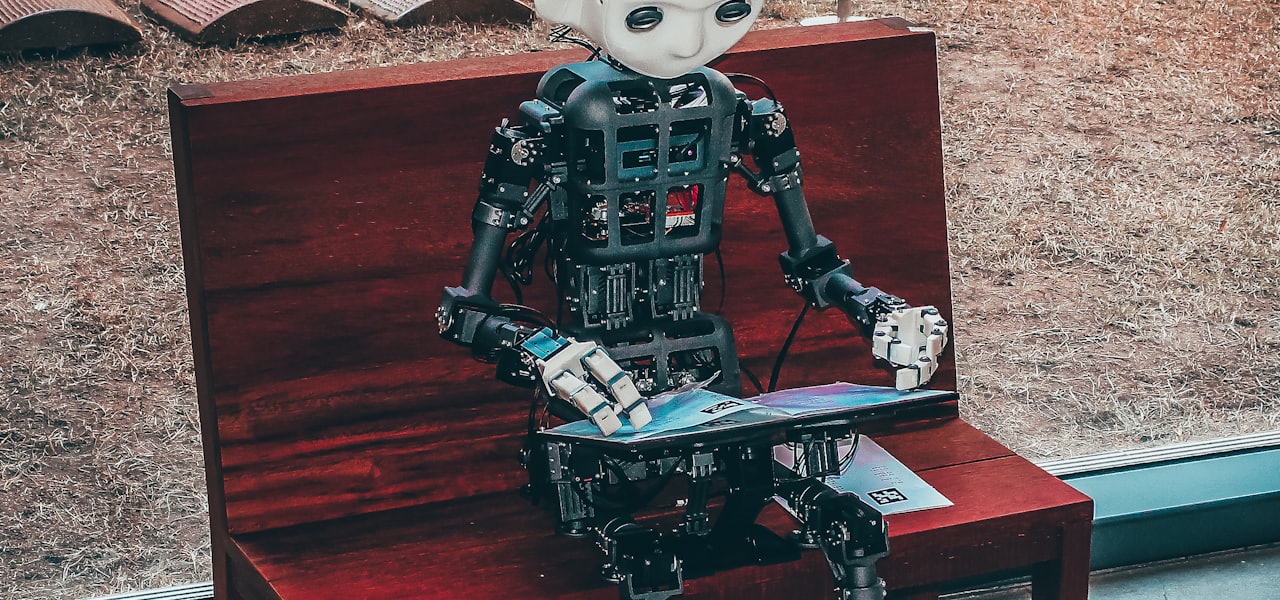
Biohybrid systems refer to the integration of biological materials, such as cells or tissues, with artificial components, including electronics or mechanical structure. This combination incorporates the capabilities of living organisms with the precision of man-made technology. As a result, these systems perform tasks that neither biology nor machines could achieve independently. Biohybrid systems might use lab-cultured muscle cells to power small robots or combine sensors with living tissue for better health sensing. The intent behind these systems is to combine the benefits of biological and technological components to introduce new solutions for complex medical challenges. Biohybrid systems may have transformative potential across sectors, such as robotics to create actuators and sensors that mimic natural muscle and nerve function, medicine in developing smart implants and drug delivery systems, in prosthetics for enhancing user control through neural or muscular interfaces and environmental sustainability for deploying biohybrid solutions for pollution sensing or remediation. == Origin == The term "biohybrid" is a compound of "bio" from biology (meaning life) and "hybrid" (referring to a combination of distinct elements), denoting a field of study. Its use helps distinguish such systems from purely biological constructs or entirely synthetic machines. Early academic mentions may include bio actuated robotics papers and foundational tissue-robot integration studies published in journals like Nature Biotechnology or Science Robotics. The emergence of the term reflects a growing recognition of the need to describe systems that do not fit cleanly into traditional categories. == Design principles == One of the most significant biohybrid challenges is to engineer interfaces between living tissue and artificial materials that are efficient. This means having precise control over adhesion at the surface, diffusion of nutrients, and signal conduction. Actuation mechanisms within the heart of these systems generate movement or mechanical response. These may be in the form of living muscle cells such as skeletal myocytes or cardiomyocytes, soft pneumatic actuators, or electrical stimulation-responsive tissues. Materials selection is equally critical. Hydrogels, elastomers like PDMS (polydimethylsiloxane), and biopolymers are commonly used due to their softness and biocompatibility. These materials must support cell viability, resist immune attack, and allow the integration of mechanical or electrical components. == Key components == At their core, biohybrid systems work by bridging living biological parts with technology. Through this integration, functionality that neither system could accomplish singularly is possible. Biological parts may be cells, tissues, or even organs—occasionally cultured in a laboratory setting. These biological parts carry out biologically inspired behaviors, such as muscle contraction or chemical sensing in the body. Technological components may constitute devices like sensors, electronic components, and mechanical structure. These manipulate the system, supply power, or transfer data. An example is a sensor that is implantable within a body and detects glucose levels as it sends information to a smart phone. By integrating these artificial and biological parts, biohybrid systems can perform advanced functions, such as tissue regeneration, real-time health monitoring, or the recovery of motor function in paralysis patients. Biohybrid systems generally consist of two major components: the biological and the mechanical. Biological components may include muscle cells for contraction, endothelial cells for vascularization, and stem cells for regenerative capabilities. Mechanical components comprise soft actuators that mimic organic motion, synthetic scaffolds that provide support and structure, and microfluidic systems that facilitate the delivery of nutrients and removal of waste. These components are combined in a manner that allows for dynamic, lifelike behavior—such as the contraction of tissue or the propagation of mechanical waves—while maintaining biocompatibility and durability. == Applications == The range of applications for biohybrid systems is broad and continuously expanding. In robotics, biohybrid structures have been used to engineer microscopic, muscle-driven machines, such as Harvard University's biohybrid stingray robot. In medical applications, they offer new alternatives for organ repair and augmentation, including biohybrid heart valves and esophageal scaffolds. Biohybrids are also promising in neural interfaces, where the goal is to create long-lasting, stable interaction between mechanical devices and brain tissue. Muscle-actuated drug response platforms are under exploration in pharmacology for modelling and real-time screening. == Examples == Several high-profile research projects have demonstrated the potential of biohybrid systems: Harvard researchers developed a biohybrid swimming ray powered by rat cardiac cells layered onto a gold skeleton, mimicking the motion of a real stingray. At the Massachusetts Institute of Technology, a cardiac pump actuated entirely by living heart muscle cells was engineered to simulate the behavior of a beating heart. Bio actuated soft robots have been built to simulate gut peristalsis, using muscle contractions to replicate natural wave-like movement in the digestive tract. == Challenges and limitations == As with many technologies that involve living systems, biohybrid systems raise important ethical and biomedical questions. Cell sourcing remains a key issue, particularly when embryonic or animal-derived cells are used. Long-term viability is another concern—living tissues must be kept alive with nutrients and oxygen, and they often degrade or elicit immune responses when implanted. Powering these biological parts presents logistical and ethical hurdles as well. Systems must either include internal mechanisms for nutrient delivery or be supported externally, which can limit portability and independence. == Future directions == Researchers are exploring self-directed, self-regulated organ substitutes and regenerative implants that can respond to their surroundings in real-time. These systems may be integrated with artificial intelligence to make them adjust to stimuli and coordinate complex behaviors. Future potential applications are wearable biohybrid systems for rehabilitation, space medicine devices for long-duration missions, and implantable devices that integrate into human physiology.